

The Sad Demise of Color
By Todd Duhnke
To quote comedian Dennis Miller, “Now I don’t want to go off on a rant here,” but I must ask the question, what ever happened to the use of color in today’s automobiles? Inside and out. It used to be that a buyer could choose from up to 23 different exterior colors. Up to seven, eight or even 15 unique interior colors and fabrics. An infinite variety was available when cars were two-toned. Today many cars offer only five color choices, of which four are the horribly common and boring black, white and grey spectrum. And maybe black, grey and tan as the only interior choices.
Sure, cars like the Mustang, Challenger, Porsche and Corvette offer some gorgeous colors in addition to the basics. But what about mainstream cars, pickups and SUVs?
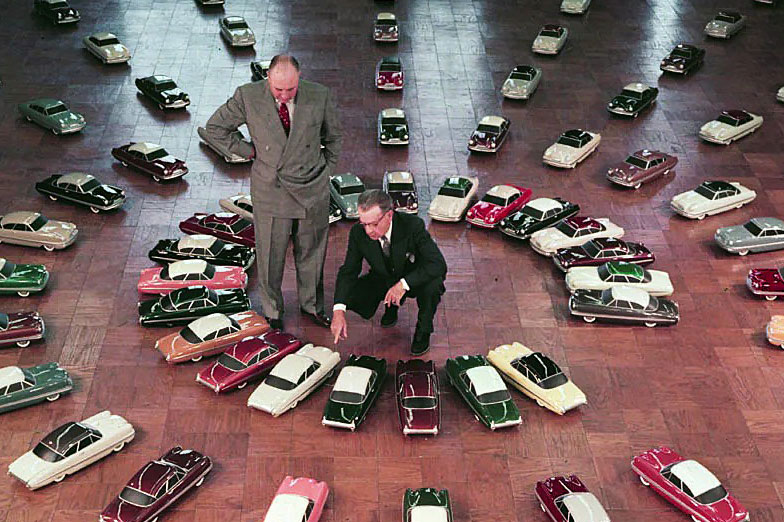
I wish I knew why the manufacturers have moved away from allowing their customers to individualize their vehicle so it’s not just a copy of their neighbors. When I was growing up people wanted their car to look unique. Unique in the neighborhood. Detroit used to spend considerable effort studying what colors were popular. What colors were new. Fabrics too as evidenced in these 1953 and 1956 Ford Styling Studio photos.
Photos courtesy of Ford Motor Company and Todd Duhnke.
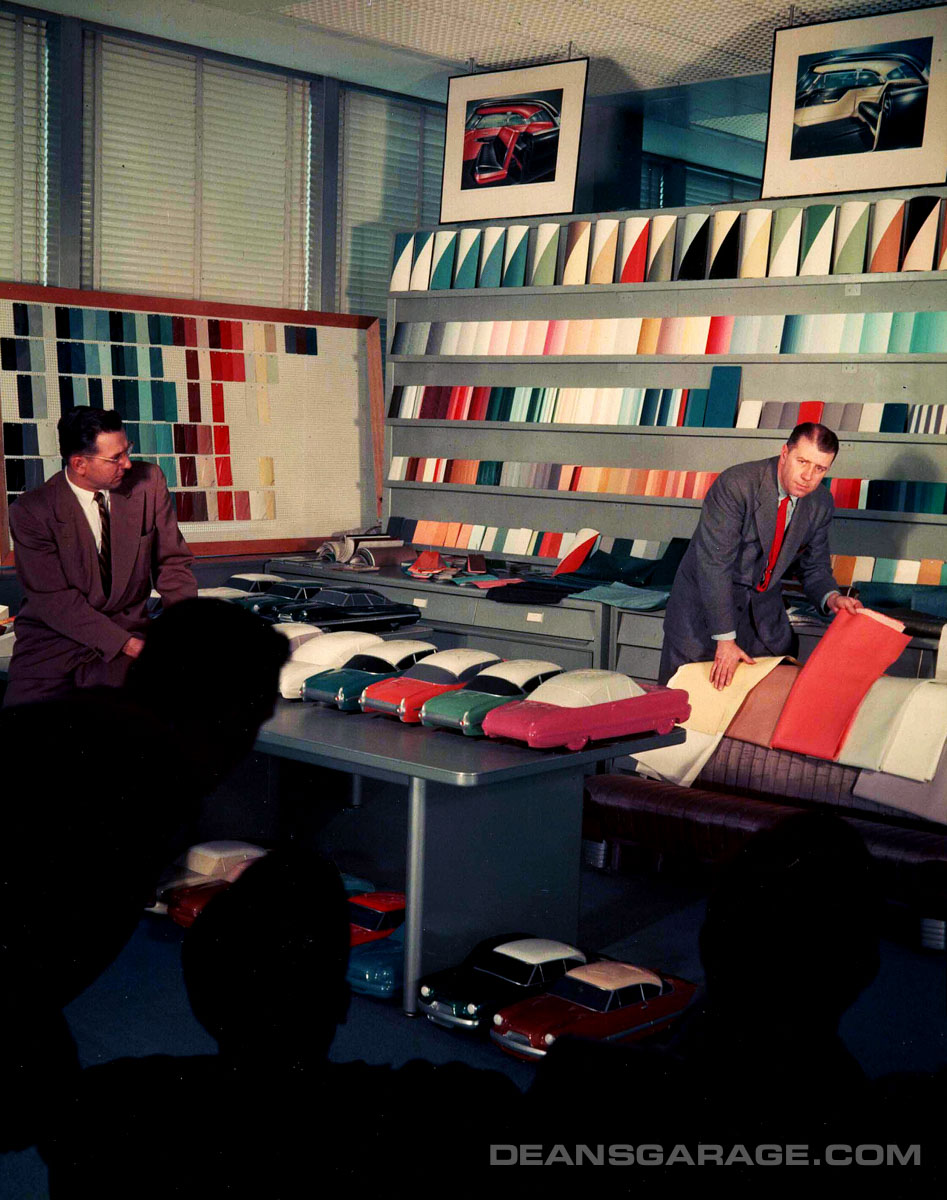
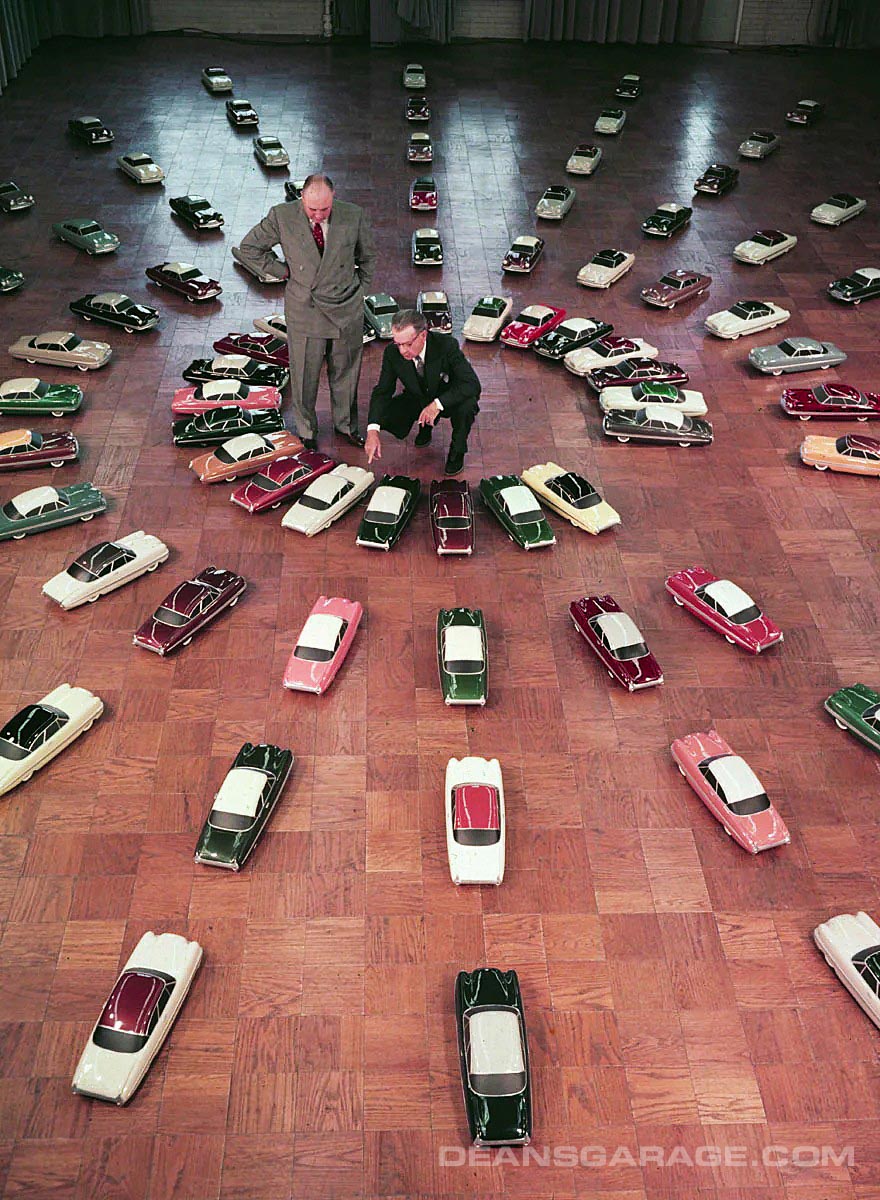
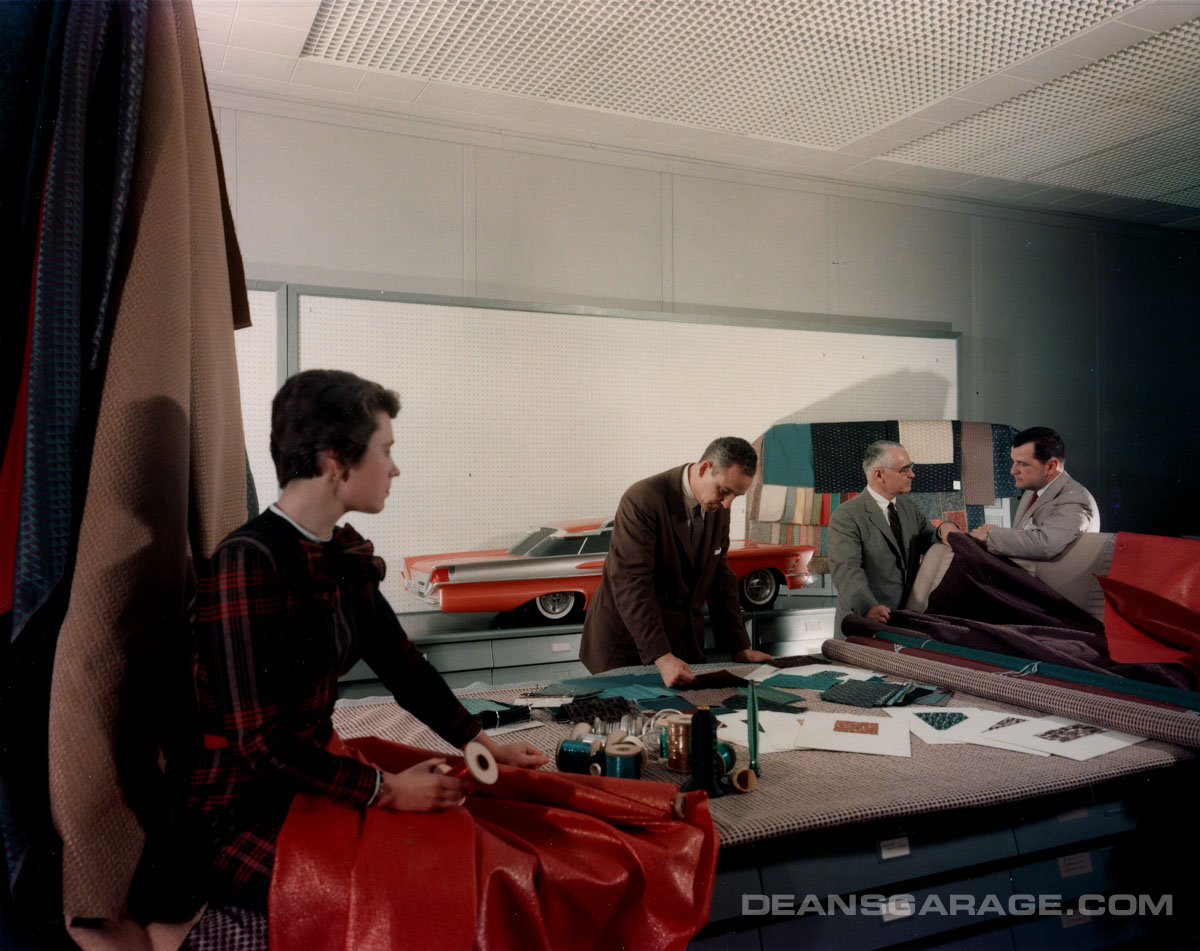
Note the model of the 1956 Mercury XM-Turnpike Cruiser in the background. That show car has now been fully preserved and restored a few years ago by Tom Maruska of Duluth, Minnesota.
The explosion of color came after WWII. Until that time automotive colors were mostly muted apart from the truly expensive vehicles. With an expanding and buoyant post war economy, people were feeling good about things and expressed themselves in their driveways. Bright and vibrant colors began to be added. By the mid-fifties’ colors like Tropical Rose, Turquoise and even Pink were available.
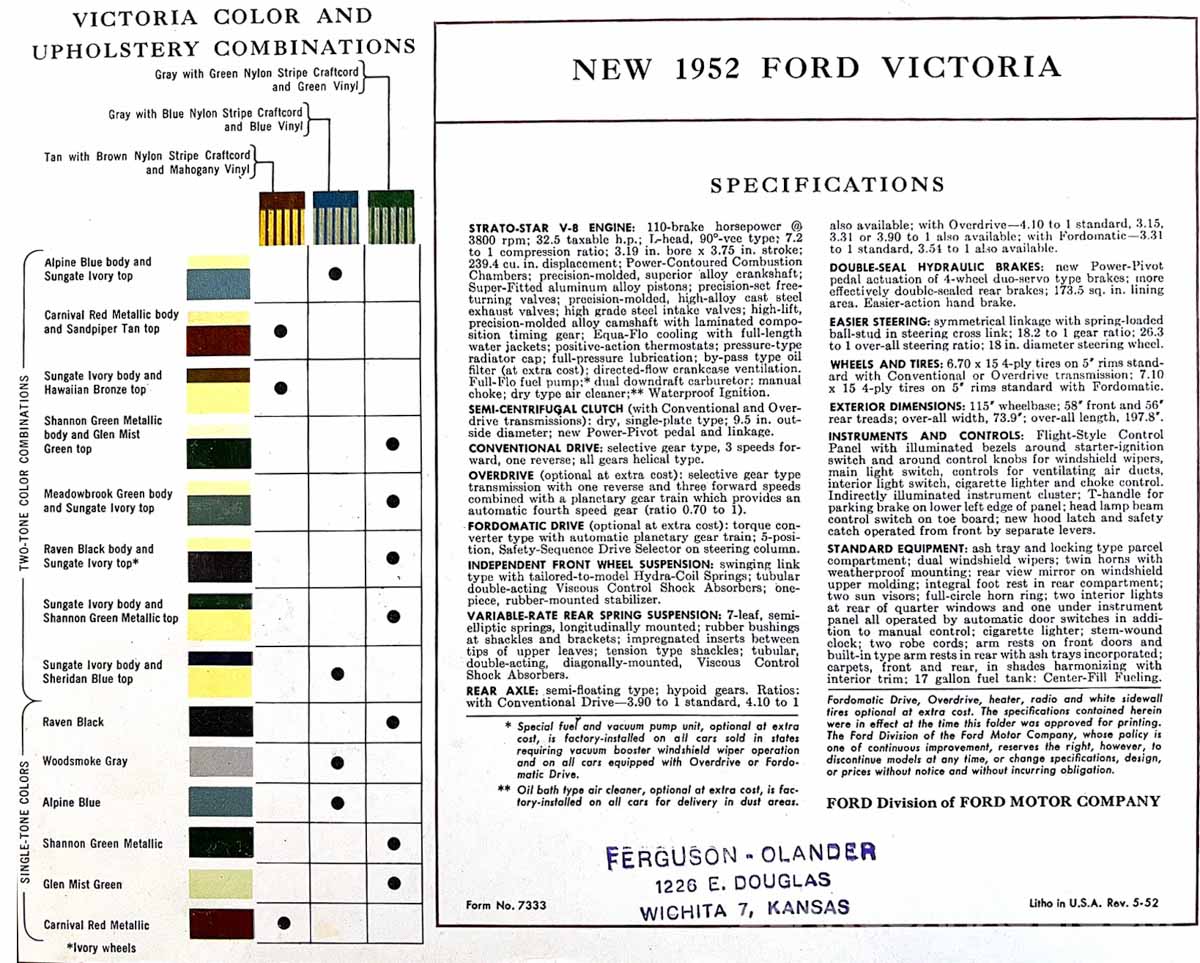
Note this 1952 Ford brochure. Twelve body colors were already available and eight possible two-tone combinations. By this time, we are starting to see some brighter colors appearing.
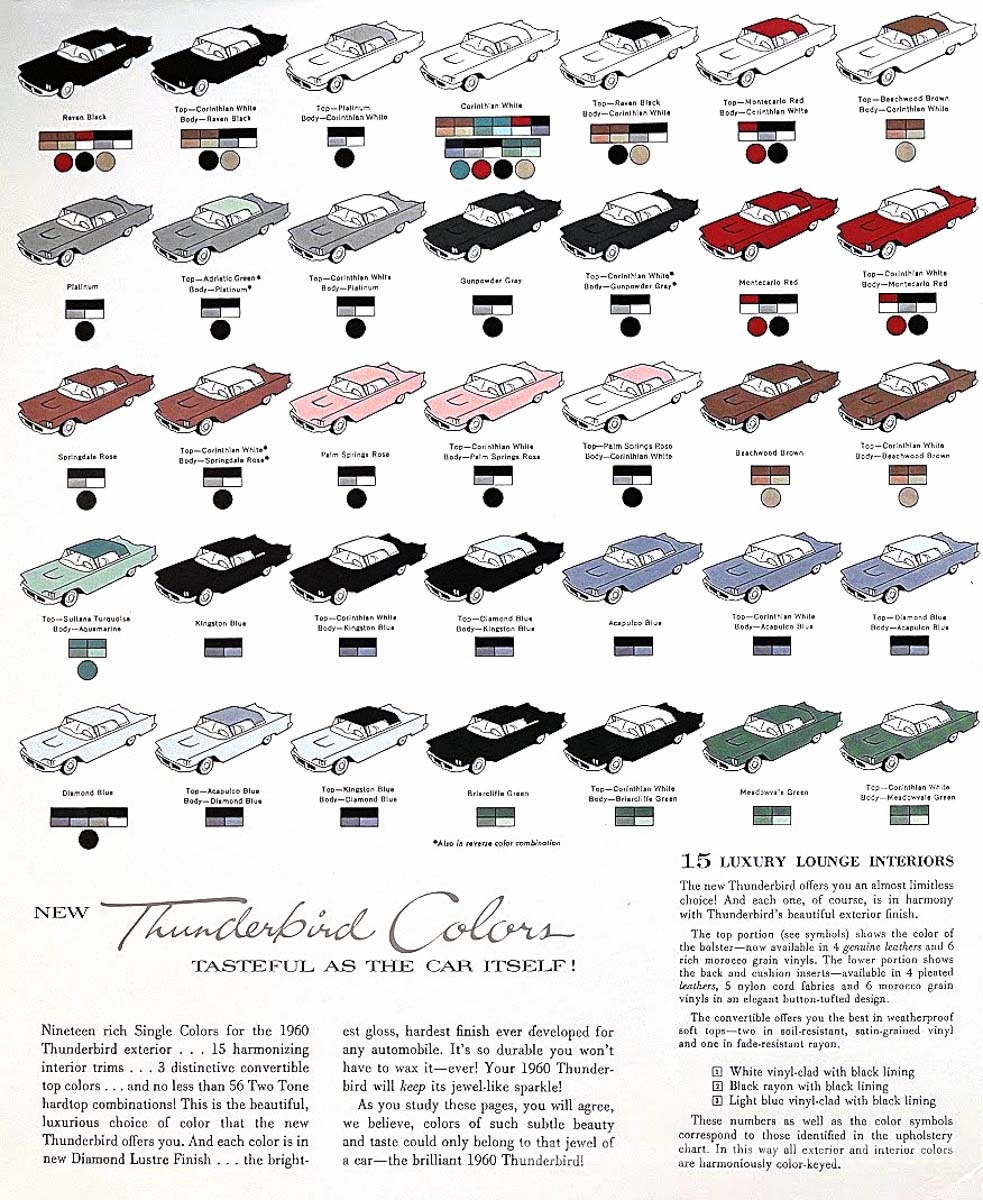
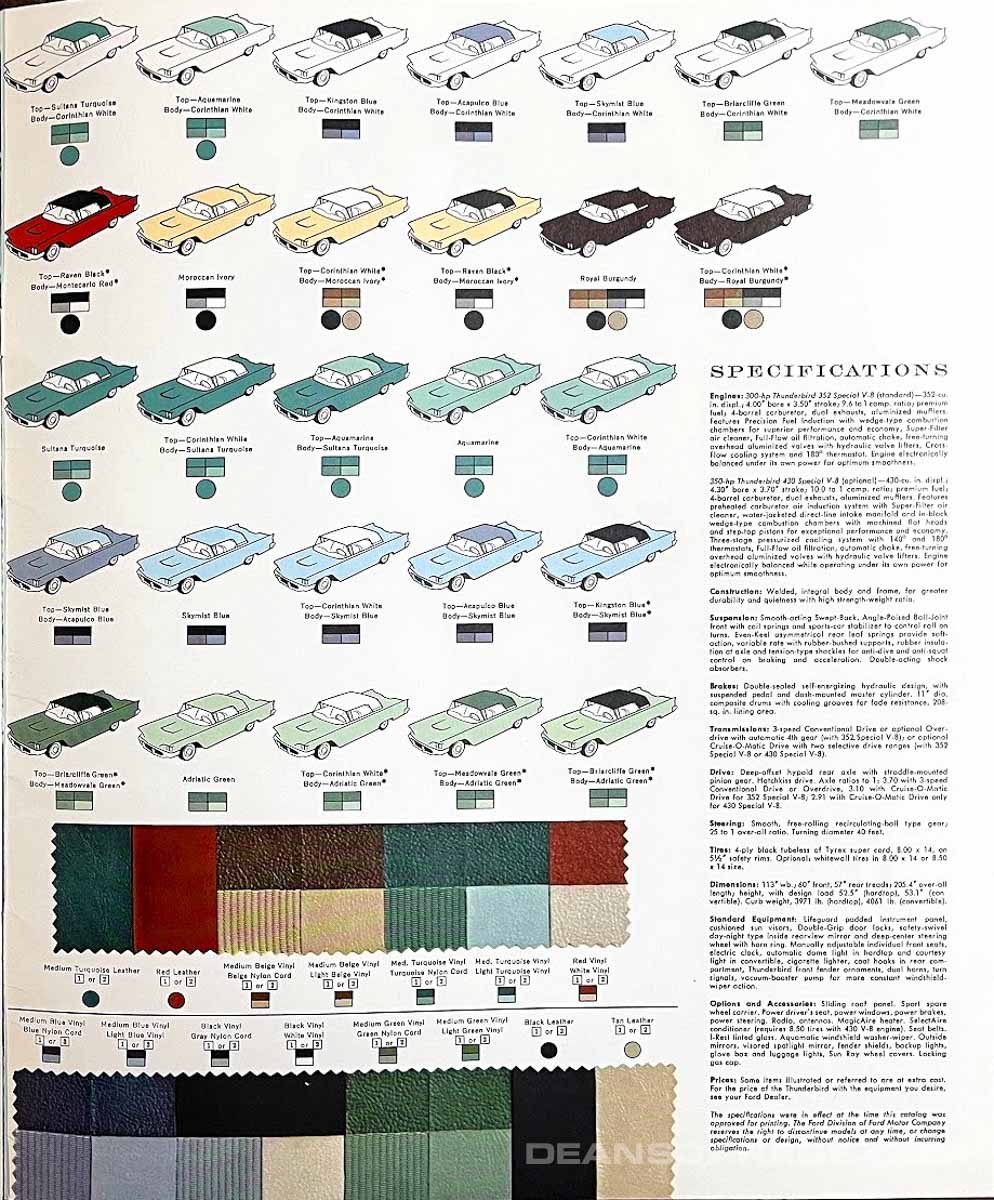
Let’s take the 1960 and 1964 Thunderbirds as examples. In 1960 Ford offered 19 different Thunderbird body colors and 15 interior trims. Three convertible top color choices. When a contrasting color on the hardtop was chosen there were a staggering 63 different combinations available to choose from. Few 1960 Thunderbirds that moved down Wixom Assembly or sat on the dealer’s lot looked the same.
In 1964 Ford still offered 19 Thunderbird exterior colors and now nine different vinyl and five different leather interior colors. No wonder Ford called it, “Unique in all the World!”
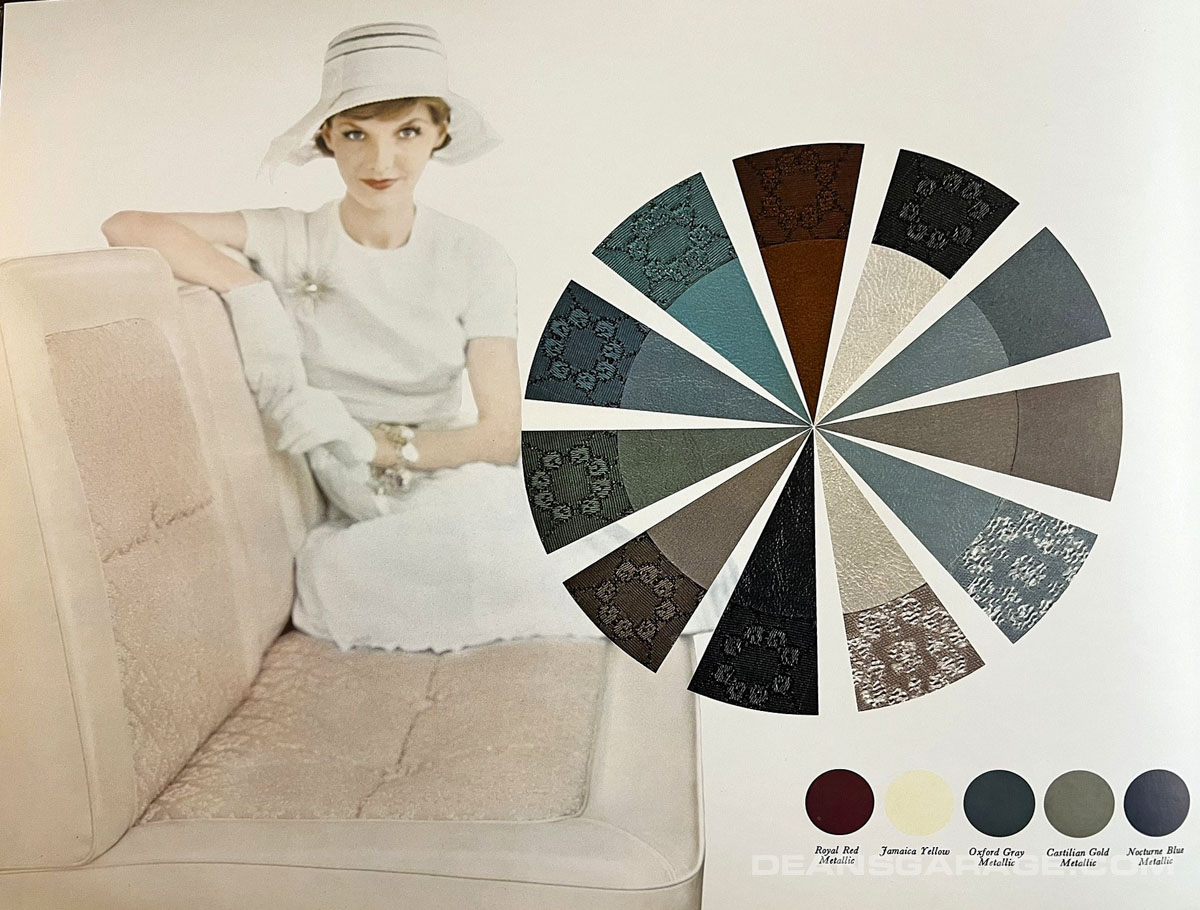
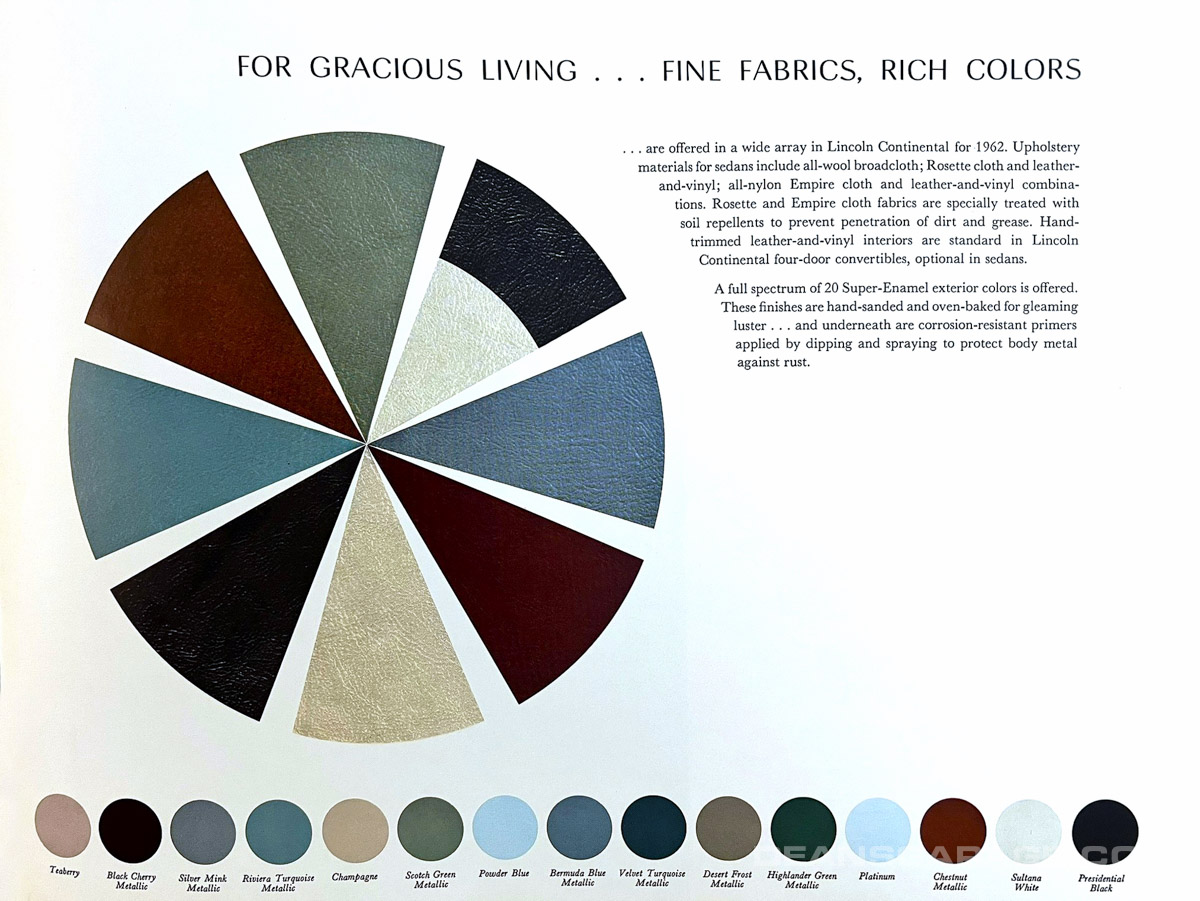
Lincoln too offered many choices. These being in their prestige catalog from 1962.
Twenty colors to choose from in 1962. And interior choices of wool Broadcloth, Nylon, Rosett, and Empire cloths and leather to select from.
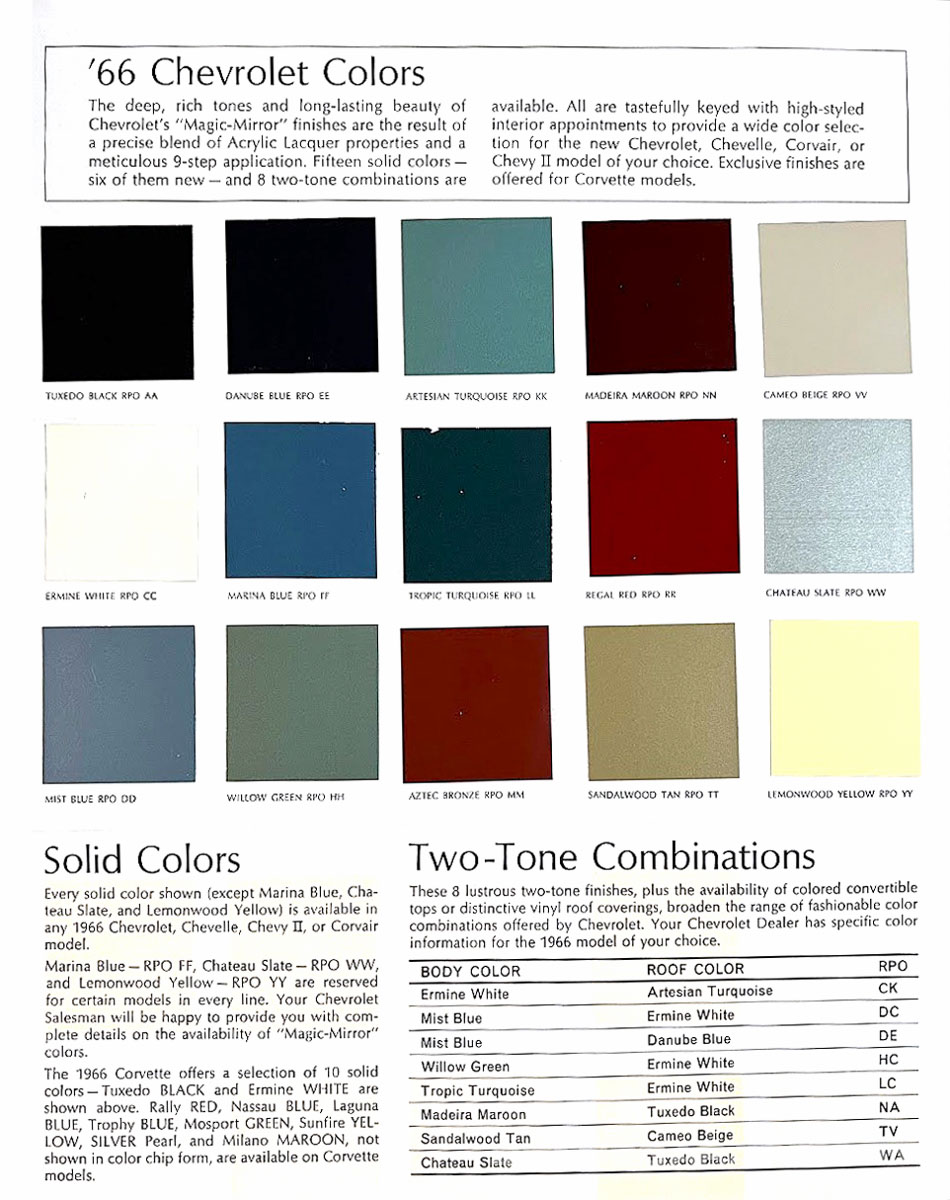
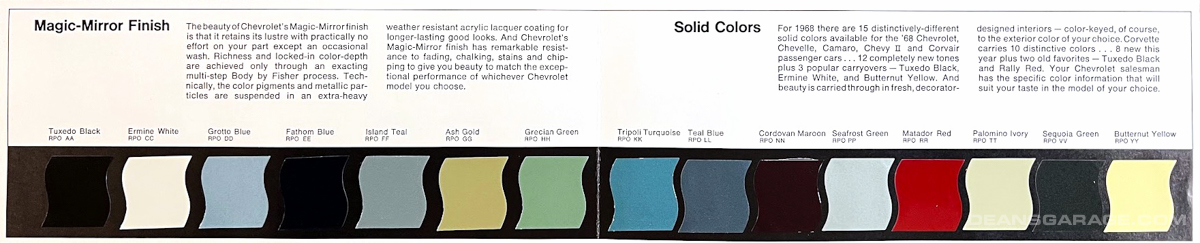
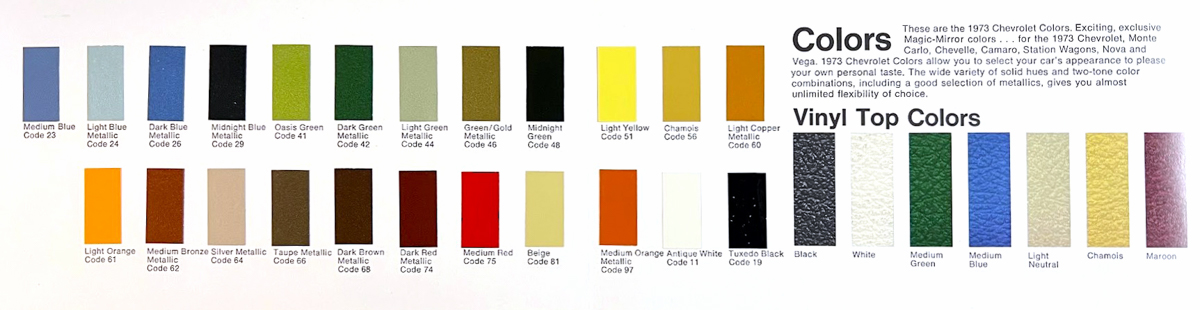
Above are ’66, ’68 and ’73 Chevrolet color chip brochures.
GM and Chrysler were equally prolific in their offerings. In 1966 Chevrolet offered 15 different colors across their model lines plus eight different two-tone combinations. By 1973 it had grown to an amazing 23 different colors across just their sedan product line. And seven different vinyl top choices. Plus, even more unique colors for the Corvette.
Detroit was so proud of their color variety that they even produced small brochures that only listed exterior color choices. Try and find one of those in today’s showroom!
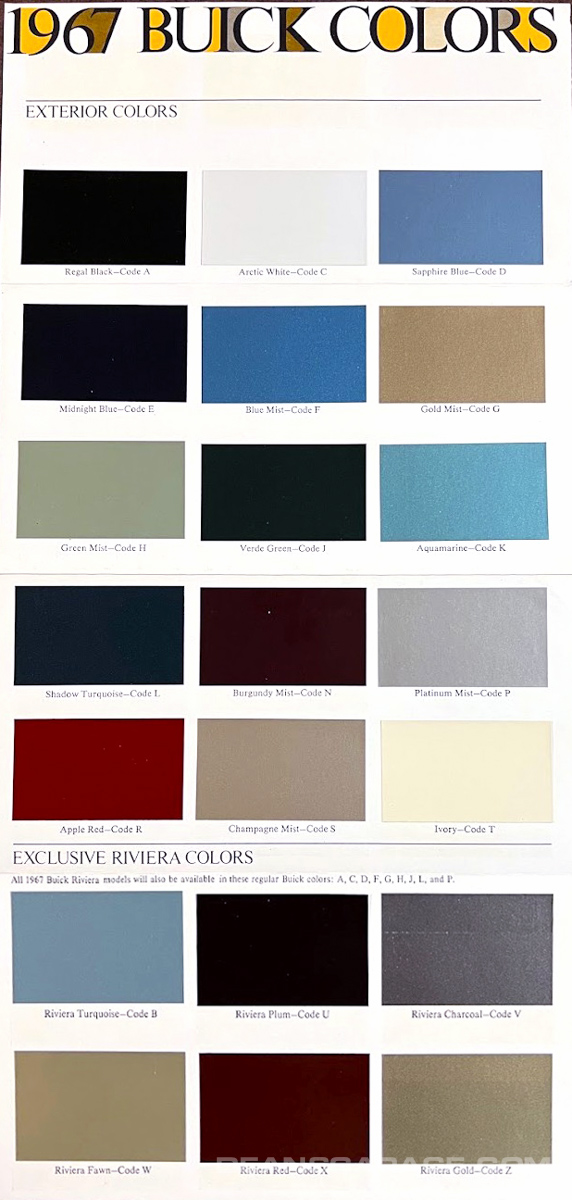
More upscale Buick in ’67 offered 15 exterior colors plus six exclusive Riviera colors. In all of these brochures note how varied the choices used to be. Blues, greens, yellows, reds, turquoise in addition to white, black, grey and silver. And not just one shade of blue or green available. Several choices.
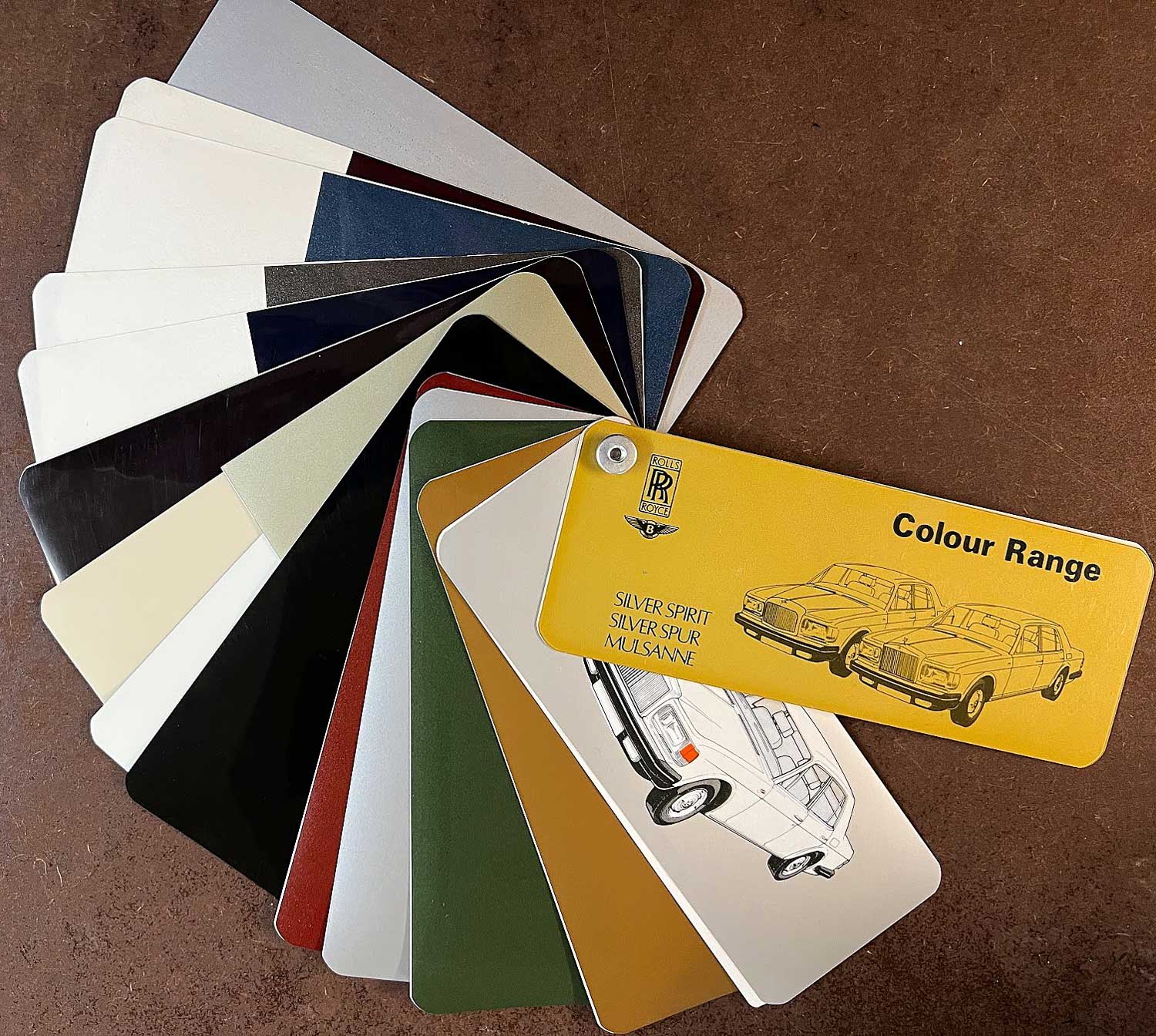
All the manufacturers used to be proud of their wide variety of color and interior choices and issued paint chip brochures like these few examples. Even Rolls Royce!
Detroit used to have fun with color names. Dodge had great color names like Plum Crazy, Go Mango, Panther Pink, Top Banana and Sublime. Even recently with White Knuckle, TorRed and Hellraisin. Ford too as evidenced with the ’70 Maverick. Great names like Anti-establish Mint, Hulla Blue, Original Cinnamon and Freudian Gilt. Too bad the fun is gone.
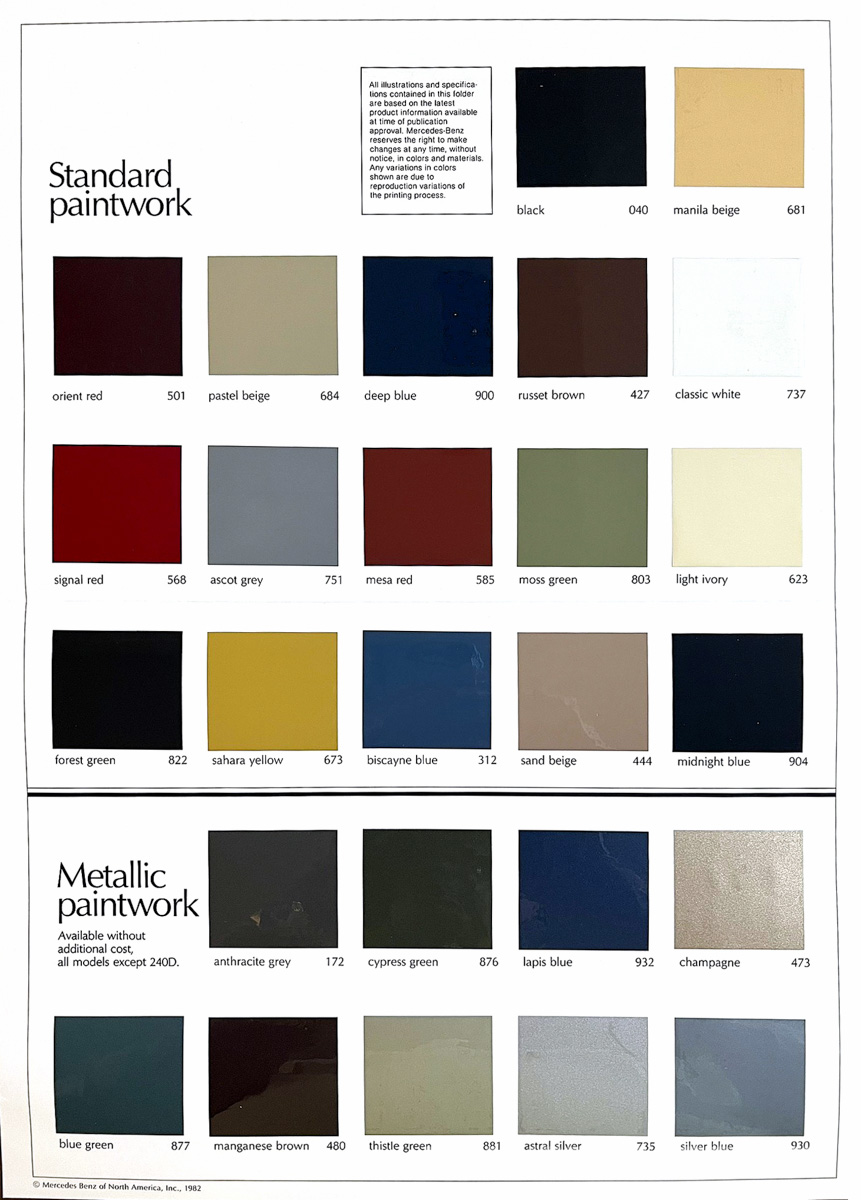
Above is the color chart from Mercedes Benz from the mid 1980s. Seventeen solid color choices and nine metallics. Choice was still alive.
If manufacturers didn’t offer a paint chip color brochure the colors were shown in detail in their product catalogs and brochures.
Try to find any of these today, let alone any printed brochures. They say it’s all on-line. Great. And have you noticed when you do go online the colors depicted in so many cases on the computer aren’t that close to the actual color on the car?
Where are we today?
How bad has it become? Last November we traded in our ten-year-old Lincoln Navigator for a new Navigator. From a choice point of view, it was not a pleasant experience. The lack of color choice is depressing. Lincoln’s top of the line model only offered five exterior colors, of which only one was not the infinitely common white, gray and black. And only three interior choices. And this is for the Navigator’s top trim level, Black Label, on their top of the range car. And it seems to have gotten worse. Because for the 2027 model year only four exterior colors are now available to choose from on their Navigator top trim line according to Lincoln.com. One of which isn’t white, black or grey. Add to that nonsense and Ford now charges up to $2,000 for any color other than black. Ford has moved another step closer to Henry Ford’s old mantra of any color as long as it’s black.
As a consumer, I simply don’t understand. I’m sure they will say it’s partly due to cost, but painting a car today is fully automated. It can’t cost a whole lot more to have a few more paint squirters.
I think part of the problem is that it has become a bit of a self-fulfilled prophecy. Dealers these days seem to only order white, gray or black for their stock. A customer comes in and wants instant gratification, so he picks whatever is on the lot. He won’t wait the six weeks to order a car and get that one unusual color that may be available. Dealer then says, “Yep, sold another white one. Better order another!” Ugh!
We’re very happy with our new black Navigator L even though it looks exactly like the three other black Navigators in our small neighborhood. We came so close to not doing anything because the color palette was so boring, uninspiring and limited. We didn’t select black; we settled for it as the least objectionable. It was so disappointing. I hope someone sends a copy of this post to Jim Farley!
It’s a gray 21st century. Not at all what I was promised in the ’60s.
I meet people who express real horror at the thought of a red or brown or pale yellow car.
I think it’s a matter of exuberance, and for some reason, despite our prosperity, we just don’t seem to be in an exuberant time.
As a former graphic designer, we learned that “color is JOY”, and the lack of color in the cars of today just adds to the feelings of angst and boredom that so much of society has these days. There is NO JOY in black, gray, charcoal, or silver!!!!! White? Minimally, but at least it feels less “dirty.” DETROIT, PLEASE GIVE US SOME COLOR CHOICES and maybe I’ll think about buying a new car!!!!
Todd
Excellent article on a subject that’s been close to my heart for decades. Many thanks for the stunning Ford archive photos!
I kinda think personal vehicle styling is way past its golden age, as cars are bought more as appliances, then emotional statements as they were during the COLORFUL golden age
To get a vintage color rush that’s almost car porn, check out the opening scene of 1963/4 “Hazel” episodes.
In both years the Baxters leave their mid century digs in new Ford XL 500 convertibles with the tops down, boots snapped on . Both cars are solid Rangoon red . everything inside is matching red , carpet, dash , steering wheel etc.
Add to that the flipper wheel covers, glitzing in the light. Doesn’t get any sexier than that !
In ‘63, My Dad told me he ordered a new 4 speed Corvair Monza convertible.
When he told me the colors that he’d ordered, my 11 year old sense of color thought he lost his friggin mind !
Adobe beige body and convertible top, saddle interior.
When it came in, He took me with him to the dealer to pick it up. OMG it was and is the classiest, most striking Corvair I’ve ever seen ! Pop got it right
Products of all kinds, including Cars show up in colors that are desired by the market. It is very closely monitored by the manufacturers, and people get what they want. In the 1980s we had 10 colors on the CHEVROLET Celebrity as I recall. Two of those colors were high risk and experimental. If people bought them, then we would include them in the lineup and drop something else, the lowest volume color.
In the 50s here in America, there were three companies. Consequently, the fight was between a low number of vehicles, compared to today, so a greater number of colors was needed to differentiate. Today it’s different, now you have many, many manufacturers, so color opportunities have diminished.
Products in any industry are produced for the customers, if they wanted brightly colored cars, they would get it. A big change occurred in the late 70s and early 80s when cars were coming from Japan. They were not ordered, they were configured by the factory as possibly the best choices and sent here by ship. That had an influence on the American market. At that point in time, you could get a green car with a red interior it would not turn out good as the designers could not develop a color palette that allowed all of those opportunities, in a way that we would now call good taste. Each color, each paint stripe, each interior color, was coded and had a part number to come through the factory. 18 exterior colors and 11 interior colors along with paint stripes and other options resulted in millions of possible combinations, each defined by a part number. In 1980 when we did the Chevrolet Celebrity Eurosport, a car that had pre-determined interior, exterior and two-tone colors, the factory threw their hats in the air and wanted to kiss us. The reason was that each part number cost ,at that time, at GM, $5000. When we removed part numbers from the production process, the cost of the vehicle went down. Interior and exterior colors that were removed were what was called the low runners. Buyers bought them in very low numbers.
The bottom line is that people are getting what they want in terms of color, option configuration, model, and manufacturer. The auto industry around the world, very carefully monitors what people are buying today, and that has a large influence on what is going to be offered in the future. That is reflected in work done at color centers for all of the major paint suppliers to the automotive industry. Color also is highly influence by fashion.
If you want to see the latest fashion colors go into a large department store, go to the women’s makeup counter and look in the display cases. There you will see paper goods, the latest friendly fashion colors. The next place where they will appear is in printed material and then low-cost products. After the products, the colors will start to appear in the paint industry, and finally the color trends become available in the Auto industry. Why is that? If you go to Arizona, you can find areas with thousands of paint chips that are undergoing sun fade tests. These tests go on for five years before a color is ready to be put into reproduction. I don’t know if that’s the way it is today, but that’s the way it was when I was Chief Designer for Cadillac.
Consequently, color pallet change is slow and evolutionary. Color pallets are also very indicative of an overall global attitude that is dictated by political and economic conditions in the world. That may not be the answer that we want to hear today, but unfortunately, it is reality.
Maybe 25 years ago, Mercedes-Benz offered a Designo option, whereby you could order from a huge variety of exterior and interior colors. The only caveat was that if they felt the combination was too strange, they could turn you down. Even today, Porsche offers Paint To Sample, which covers the whole spectrum. Of course, both of these options were expensive.
As a 10 year old I, with my friends, would ride bikes for many miles on end …just to peak into dealership car lots in hopes of seeing the upcoming new model year cars.
In ‘55 especially, the cars were then exciting in design with chrome accents dividing two and even three tone color schemes in every color imaginable. (The bright pastels were mostly the order of the day!)
Moreover the interiors carried on those colors making one feel alive and excited while riding in them. (Unlike today’s interiors that make one feel they’re in a funeral parlor!)
I realize interior chrome had to give way to safety in not blinding or distracting drivers BUT a return of more vibrant color choices for leather and cloth would certainly be an improvement.
I remember a few years back I worked at Chevrolet dealership as a sales person. 90 percent of the inventory was white trucks, that’s just about all they would order. The easiest sales were always any other color when they had one.
I’ve been studying car color and color motivation since I was old enough to read. Car history is peppered with both exciting colors and drab colors. Going by what Detroit did, exciting colors like Coral Sand, Jolly Green, Hugger Orange, Tropical Rose, Plum Crazy, the Grabbers, flourished during rousing economies. When times are gloomy, such as the Viet Nam era, colors reflected the dark mood, which gave us those dreadful brown and green earth-tones, particularly on large cars in the 1969-73 era, that no car looked good in. Then the Arab oil embargo pushed us even deeper into long decades of depressing, nameless colors.
WWI didn’t have color, but car colors during WWII were largely muted hues of dark beige, blue, green, maroon and brown.
It’s been decades since we’ve had, 1. presidents everyone was crazy about; and 2) cars everyone was crazy about. This is why we don’t see baby blue, light yellow, pale green, pink, turquoise, coral or style-toned colors interwoven between sweeping, strokes of tasteful chrome.
In 1957, Ford said about their colors, “the very names themselves conjure up a magic mood”. Modern refrigerator white is as common and exciting as telephone black was in the 1920s. Today’s dull, drab, lackluster beige, black, army gray, silver, watery brown, dark gray, off-white, sand or olive green offer nothing to endorse prosperity.
They’re telling me there’s nothing to conjure up a magic mood about, and hasn’t been for a long time.
Several readers have contacted me regarding the irony between WWII colors and what we’re seeing today. Battleship Gray, Tunis Blue, Wake Ivory, Navy Blue, Army Drab, along with flat-finish, unemotional shades of these same WWII-era tones, are dominating the Trump administration’s global conflicts of recent years.
I believe it was Tom McCahill in 1957, when comparing Ford’s new Skyliner with the 1936 Peugeot’s retractable metal roof wrote, ”There’s nothing new under the sun.”