

Disney’s EPCOT, GM’s World of Motion, and Pres Bruning.
By David Rodríguez Sánchez
Photos: General Motors, Dan Sims, Bruning family
Designers are tasked with creating practical solutions to real-world needs. They are also asked to predict future trends by exploring reaching and often fantastic ideas. They push the boundaries of what’s currently possible.
A place of particular interest for dreamers is Disney’s EPCOT Center in Florida. Opened in 1982, the “World of Motion” pavilion was sponsored and co-developed by General Motors.
This is a short history of EPCOT, along with a biography/profile of GM designer Pres Bruning, a major contributor to concepts displayed at the “World of Motion” pavilion.
EPCOT had been the unfulfilled dream of a future-world experimental colony conceived by Walt Disney in 1966. EPCOT (Experimental Prototype Community of Tomorrow) was designed as a ground-breaking habitat intended to bring solutions to the many mounting problems of current urban environments. The idea for EPCOT lingered long after Disney’s death on December 15, 1966.
The EPCOT concept of a technological and humanistic future world was far ahead of its time. Walt’s vision eventually evolved into a leisure theme park, which opened in 1982. GM’s “World of Motion” exhibit within EPCOT was the result of a partnership between GM and Disney in 1977, and materialized during the next four years under the coordination of GM’s industrial design chief Don Schwarz and deputy studio chief Dale Sheeley. “World of Motion” was one of five main themes within EPCOT (Spaceship Earth, Universe of Energy, Journey into Imagination, and The Land were the others).
“World of Motion” featured life-size, animated dioramas. Visitors, comfortably seated on open train cars (designed by GM’s overseas studio) with two rows of three seats, were able to follow the historical evolution of transportation from the beginning to the present day and beyond. The main exhibit area of “World of Motion” occupied the largest room in the purpose-built, wheel-shaped building. It was 65 feet tall, 320 feet in diameter, and was paneled with avant-garde stainless steel. This exceptionally rich and well thought-out constant-speed journey through time evoked memories of past exhibits from the 1964–1965 New York World’s Fair, Disney-Ford’s “Magic Skyways,” and GM’s “Futurama Ride II.”
At the end of the 12-minute ride through the upper lever of the circular building, visitors (up to 3,200 persons per hour) were ushered into a display area fully devoted to GM’s car universe called “Transcenter” which featured the “Concept to Reality display.”
Taking the most part of the ground level, the marketing needs of the present and the utopias of the future went hand in hand to fascinate crowds and attract them to GM’s products and services. This was to be the place where, surrounded by production vehicles in a dealer-showroom arrangement, recent concept cars from Chevrolet, Buick, Pontiac, Oldsmobile or Cadillac would be displayed for periods of time after their auto-show presentation tours.
As the tour continued, visitors were shown future GM concepts in the “Concept-Design 2000” area of GM’s “Transcenter.” The featured design was a full-size fiberglass model of the slippery Aero 2000 coupe designed by Gray Counts—an early 1980s concept car. (Gray’s fine art here.)
The “Concept-Design 2000” display also included a number of items related to the design process behind the creation of the Aero 2000; from sketch, to an operating wind-tunnel testing of a scale model, to skeleton mock-ups, to the finished design.
Throughout the ten year contract between GM and Disney for the World of Motion building operation (starting in 1982), many different regular models were displayed within Transcenter, for the literally millions of EPCOT visitors to see and experience. Displayed were many concept cars, including the 1988 Pontiac Banshee, 1989 Olds Aerotech II, 1990 GM Micro, 1990 Pontiac Sunfire, 1991 Geo Track, 1992 Pontiac Salsa, and the 1992 GM Ultralite. Chevrolet Lumina NASCAR race cars were also displayed.
The entire Aero 2000 display was replaced in 1988 with a display focused around the more aggressive and extreme SRV-1 sports car concept designed GM designers Clark Lincoln and Ken Okuyama. Also displayed at the “From Concept to Reality” section on the center turn-table was the Aero 2004.
A magnificent display for truly a myriad of daring concept ideas was in the so-called “Dreamer’s Workshop” at Transcenter. It was here where GM lifted the veil of secrecy of their designers’ most crazy and vanguard ideas for transportation vehicles. Several Advanced Design studios contributed the majority of the concepts.
EPCOT
GM's World of Motion brochure.
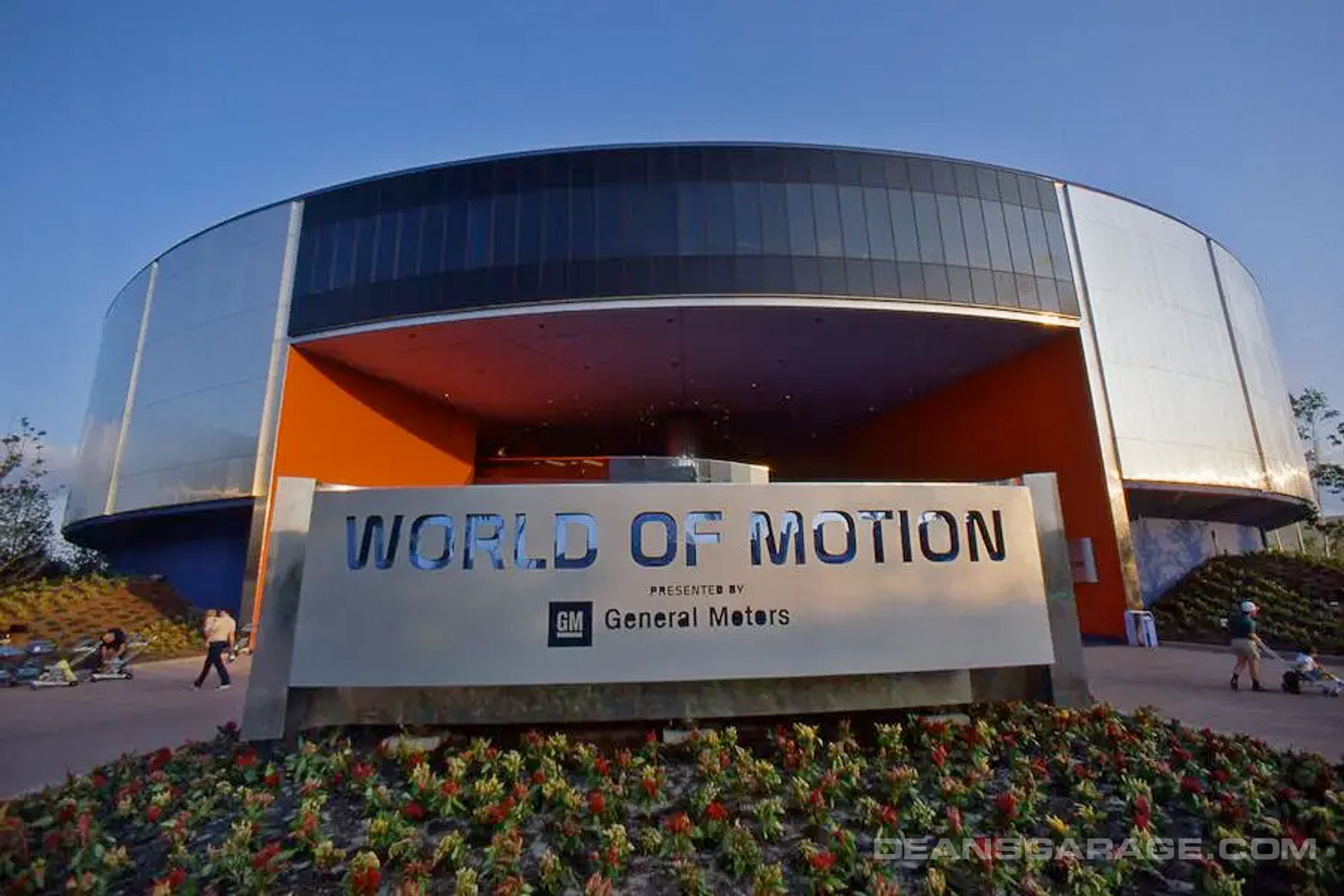
GM's World of Motion at EPCOT.
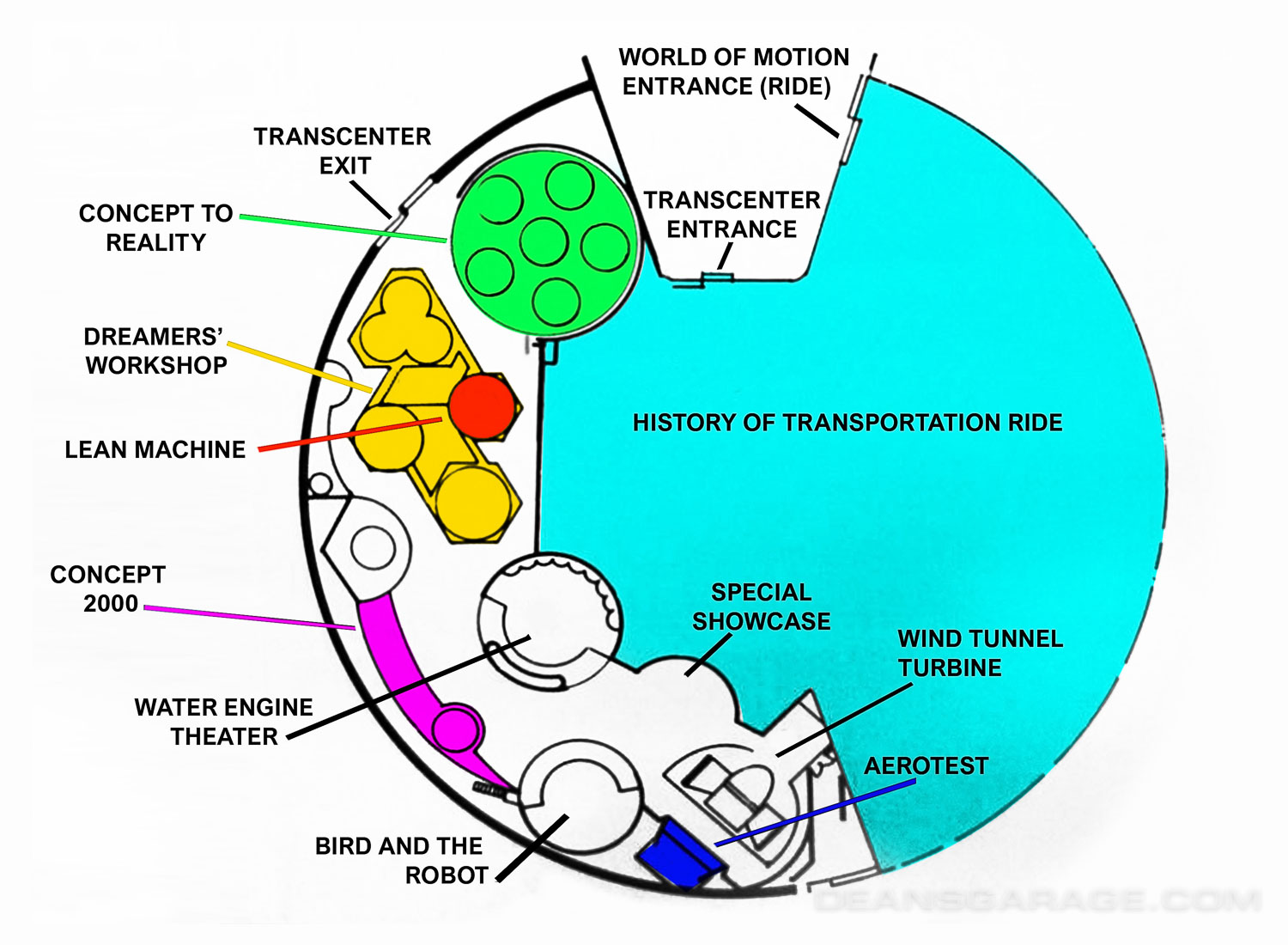
Original "World of Motion" Transcenter exhibit layout before being converted to Test Track.
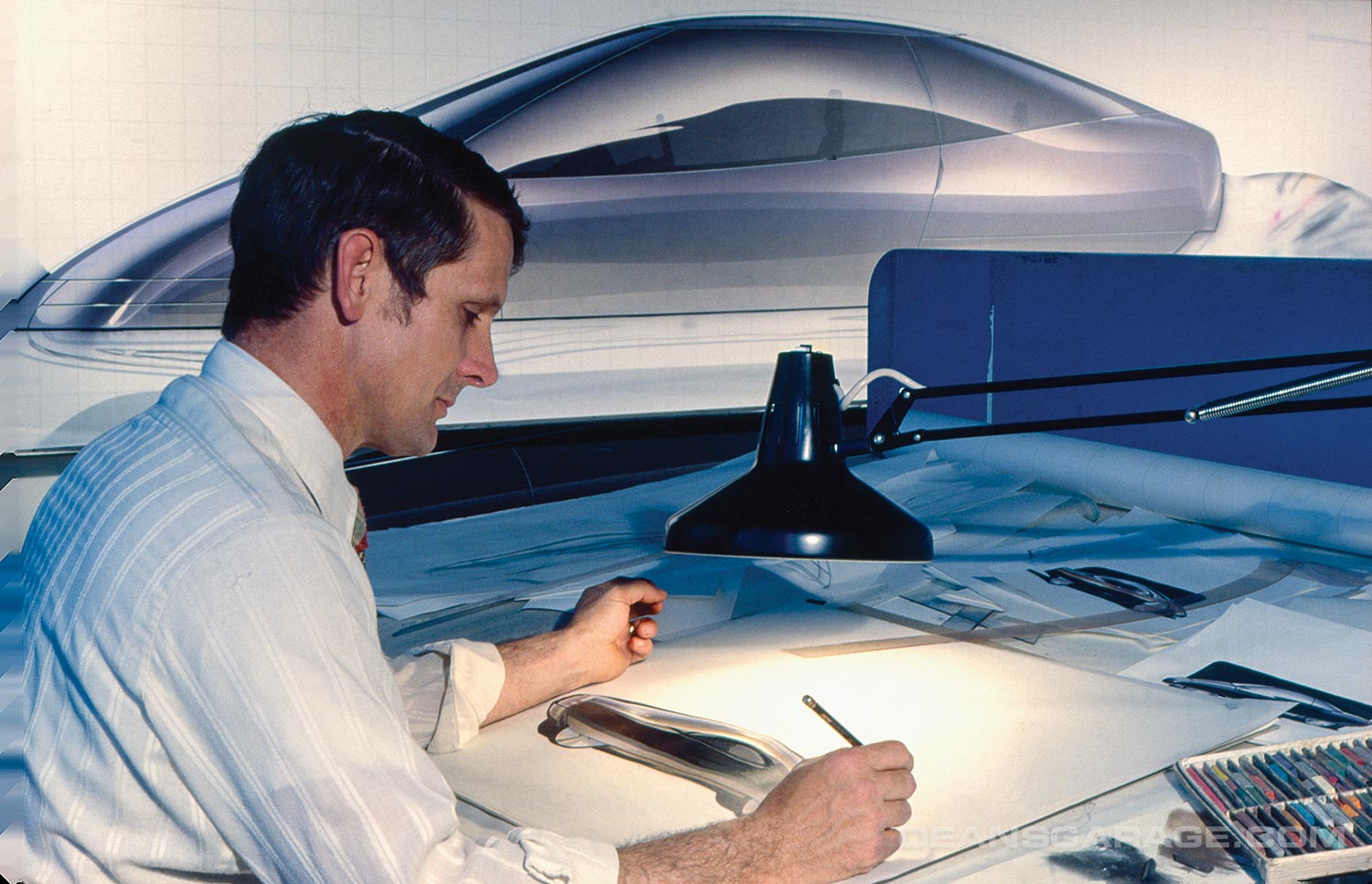
Gray Counts at the office. His unfinished rendering in the background.
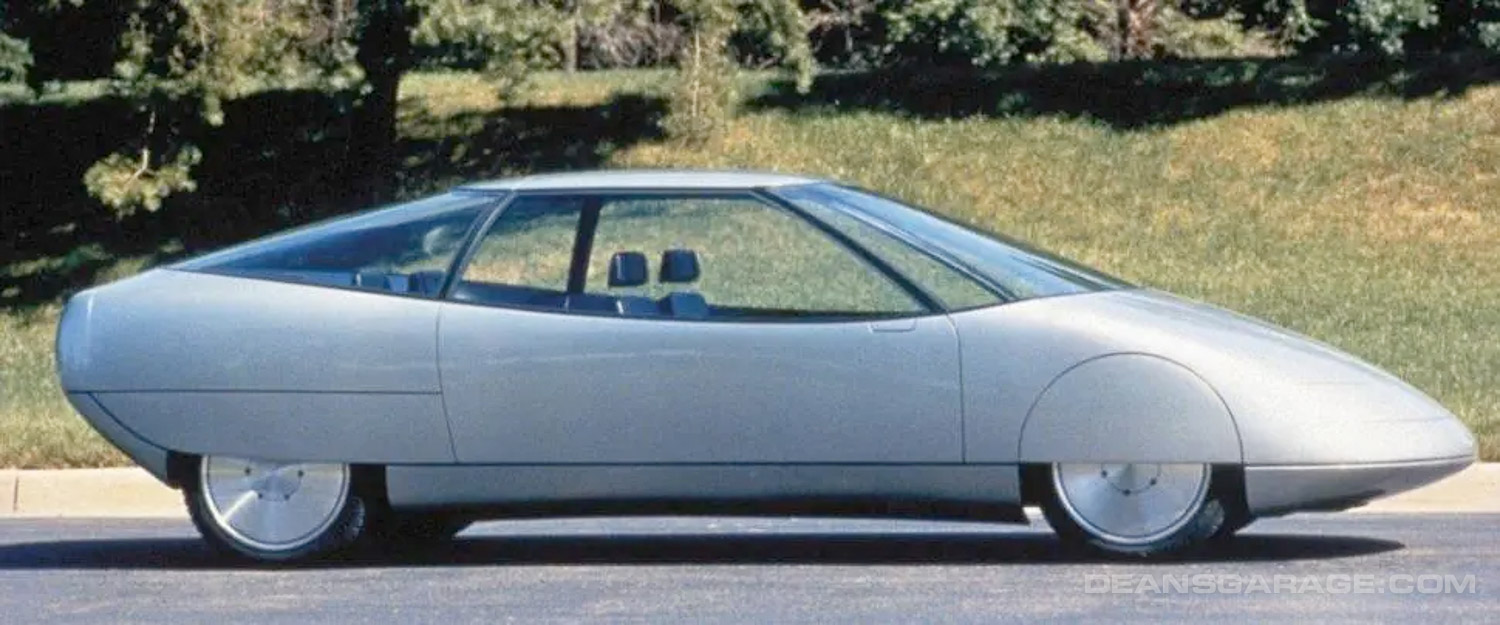
Aero 2000 full-size model.

Aero 2000 at EPCOT.
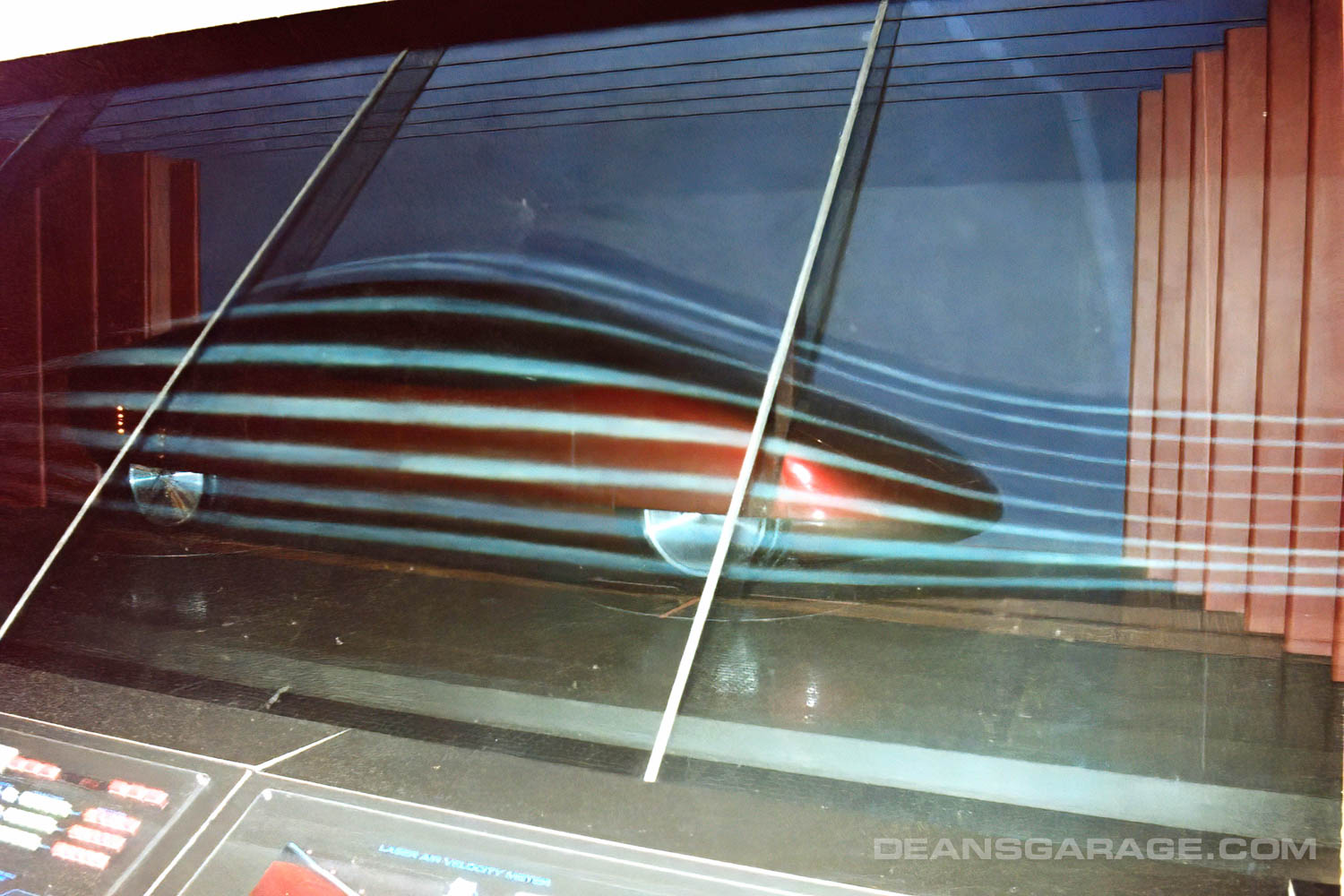
Aero 2000 wind tunnel demonstration,
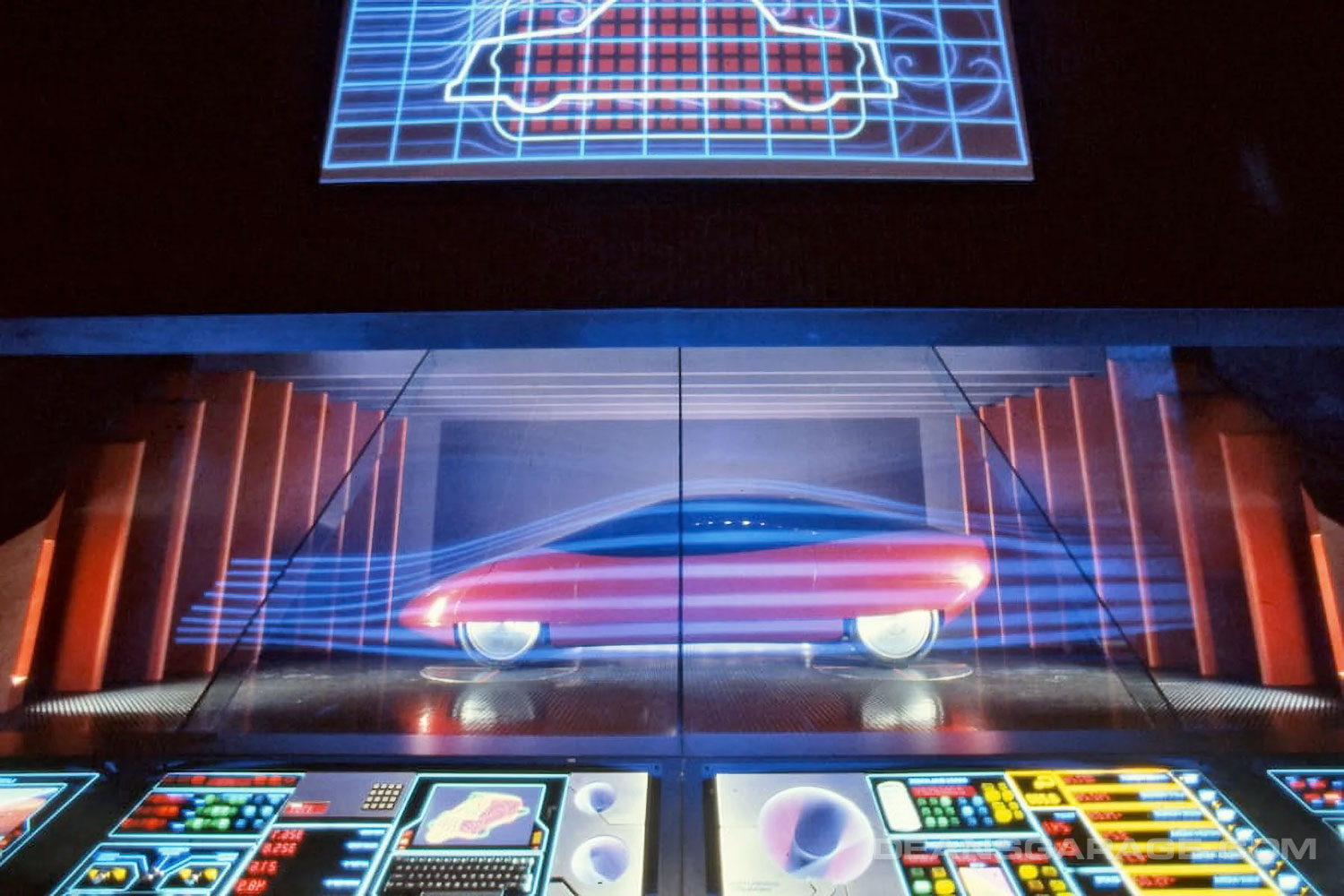
Aero 2000 wind tunnel demonstration.
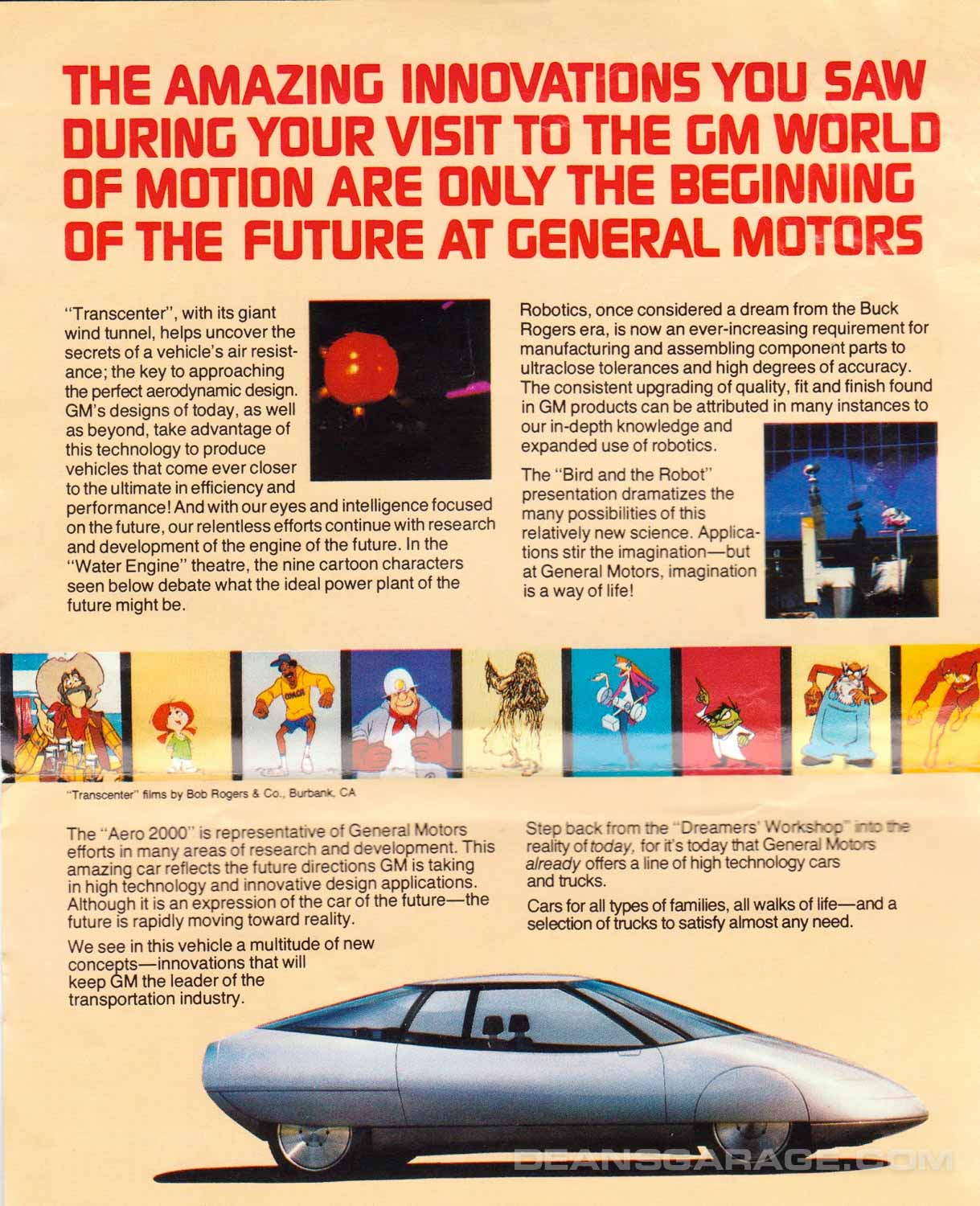
EPCOT ad featuring the Aero 2000.
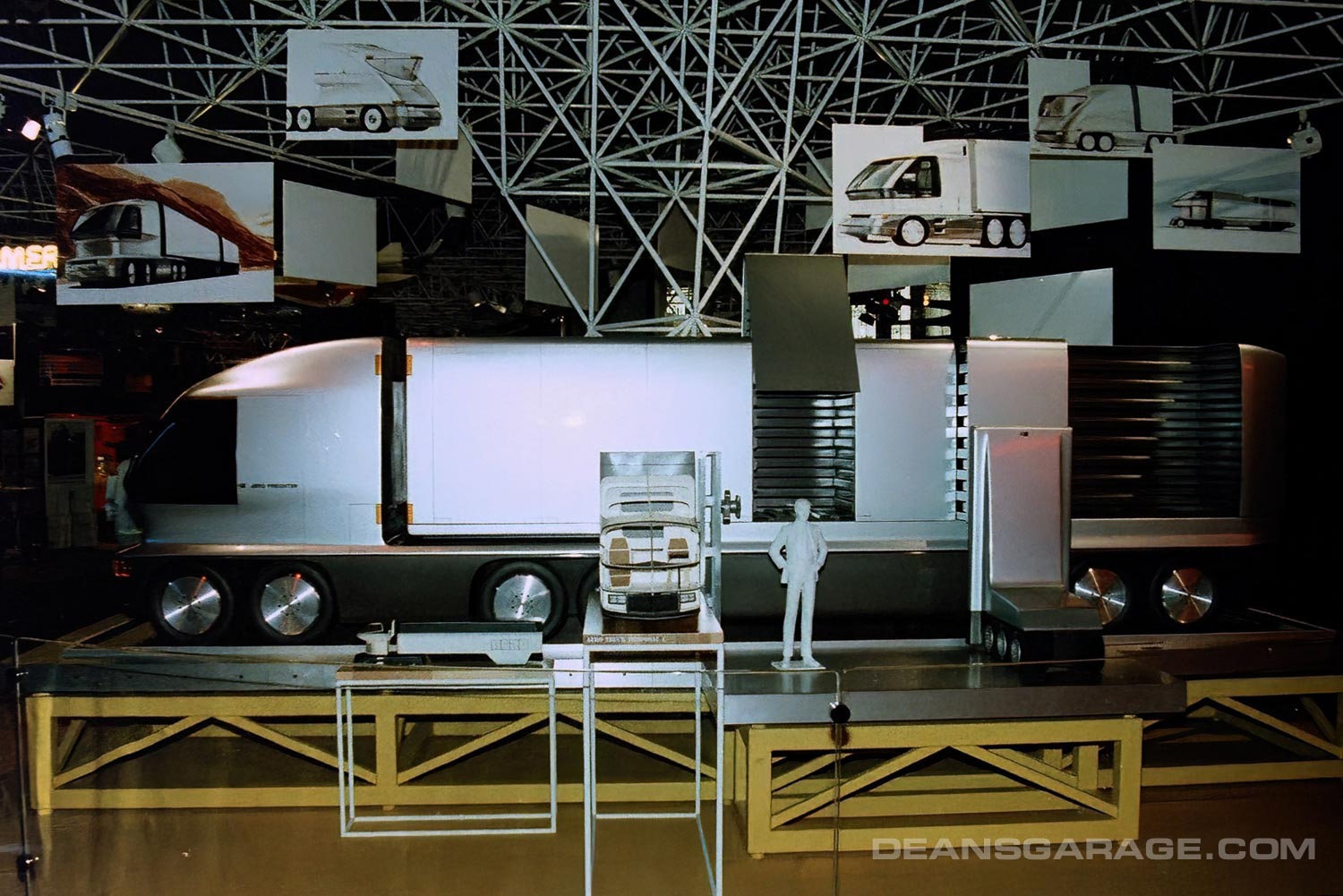
Aero-Freighters with containerized cargo concepts. 1983.
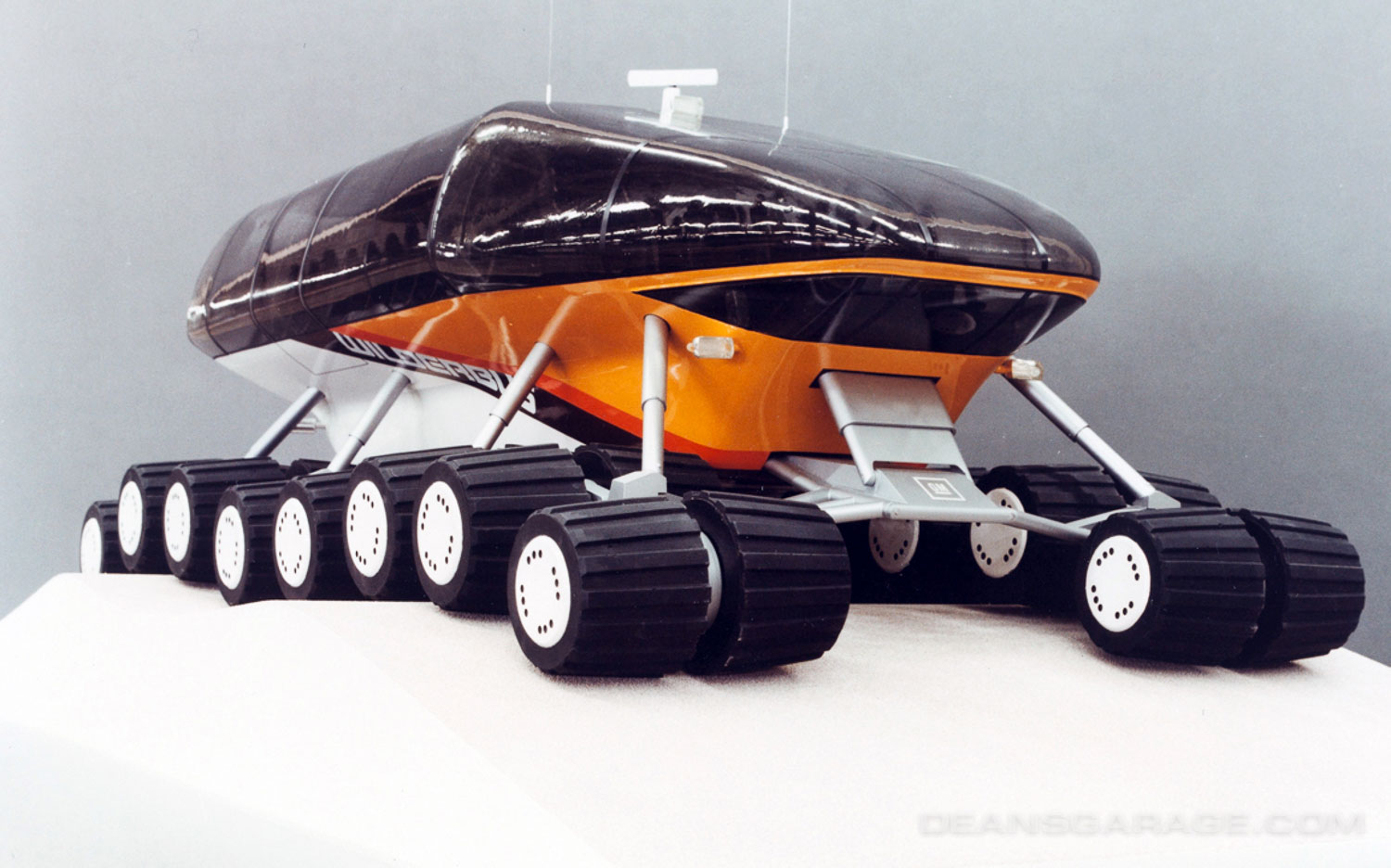
Wilderbus model.
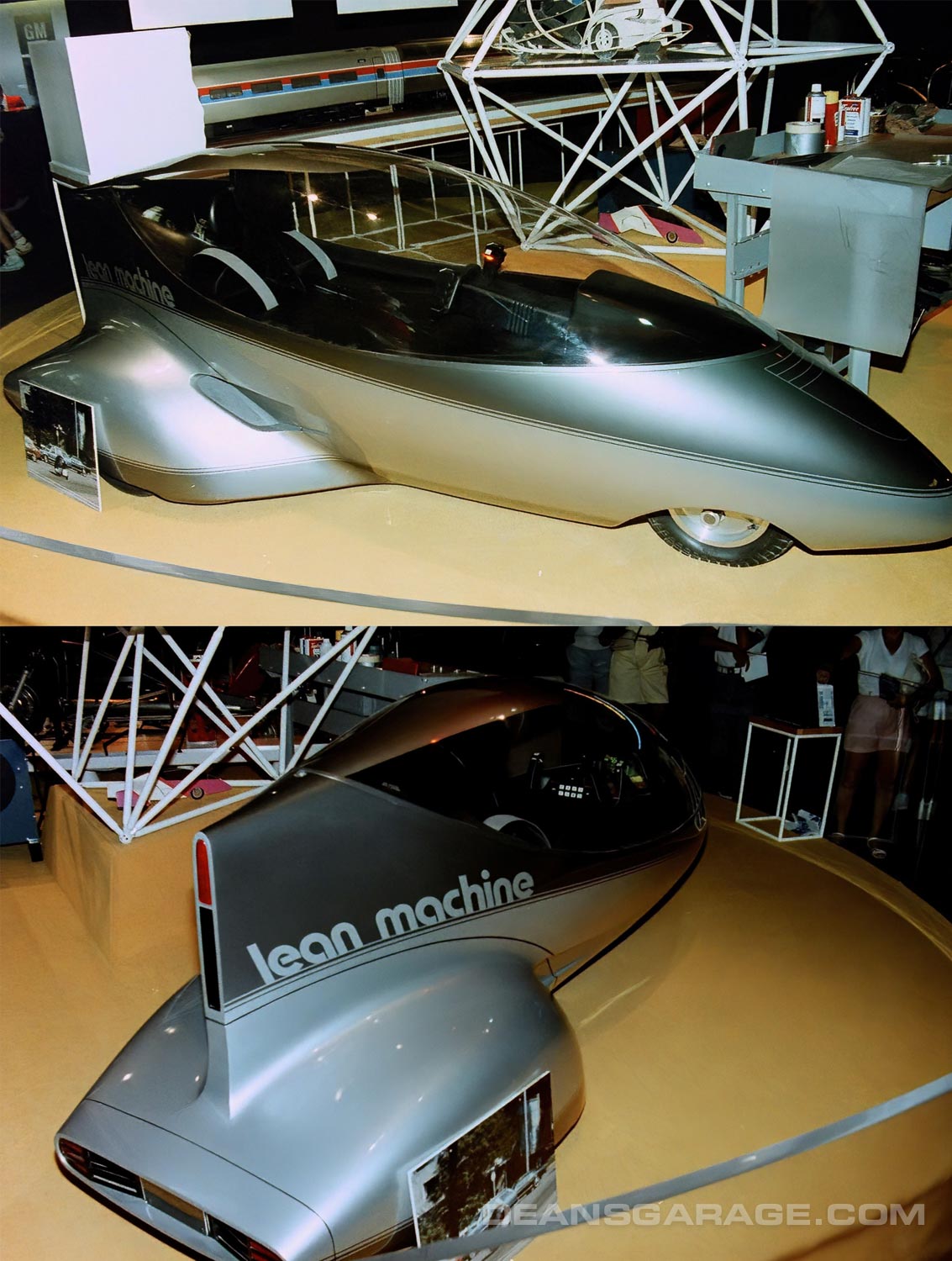
Lean Machine on display at EPCOT.
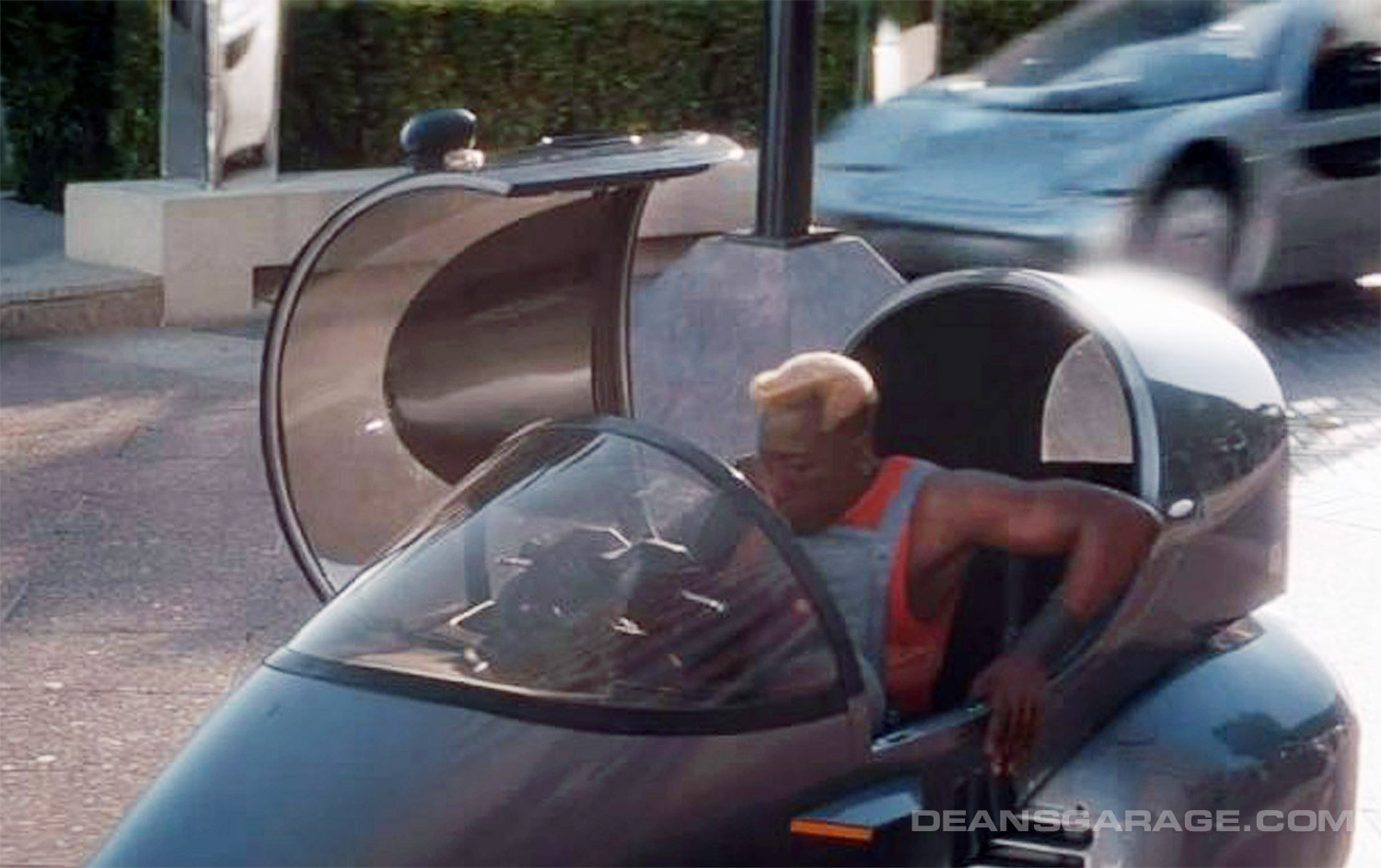
Lean Machine running movie version with Wesley Snipes.
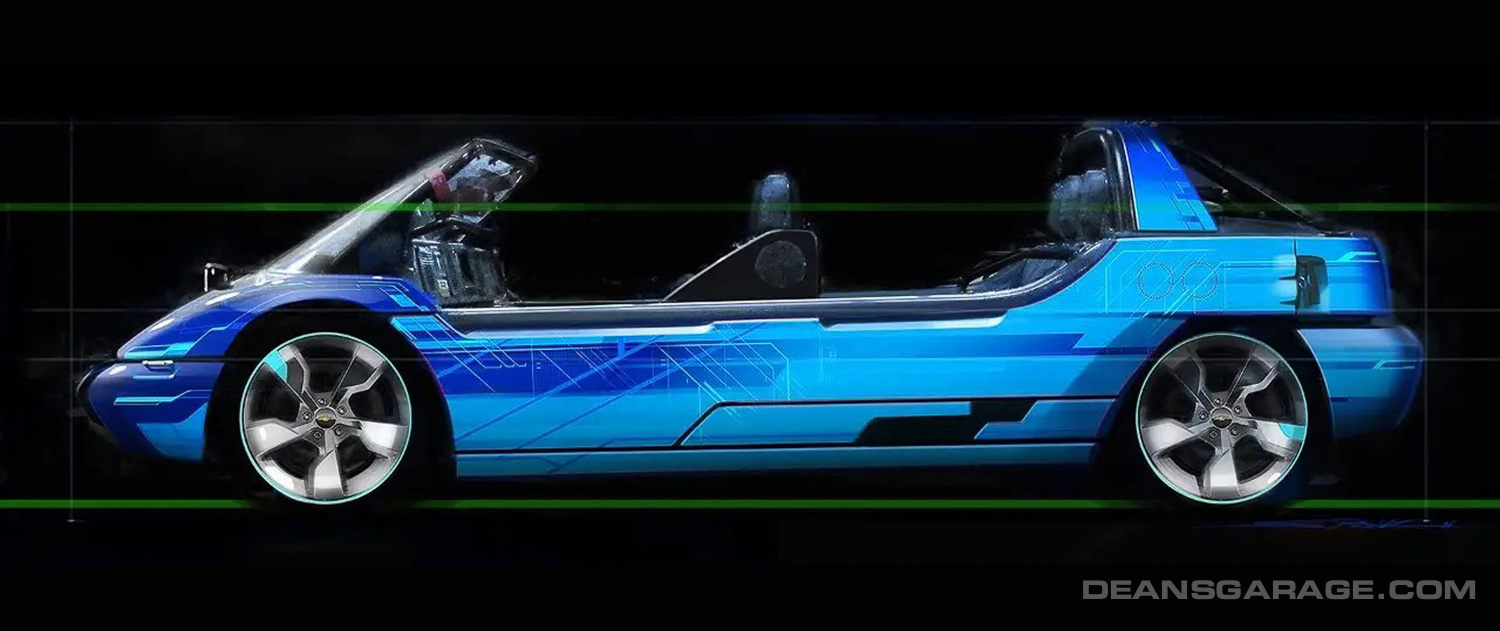
Test Track ride vehicle was Bruning's last input into GM's Epcot involvement.
Designer Pres Bruning
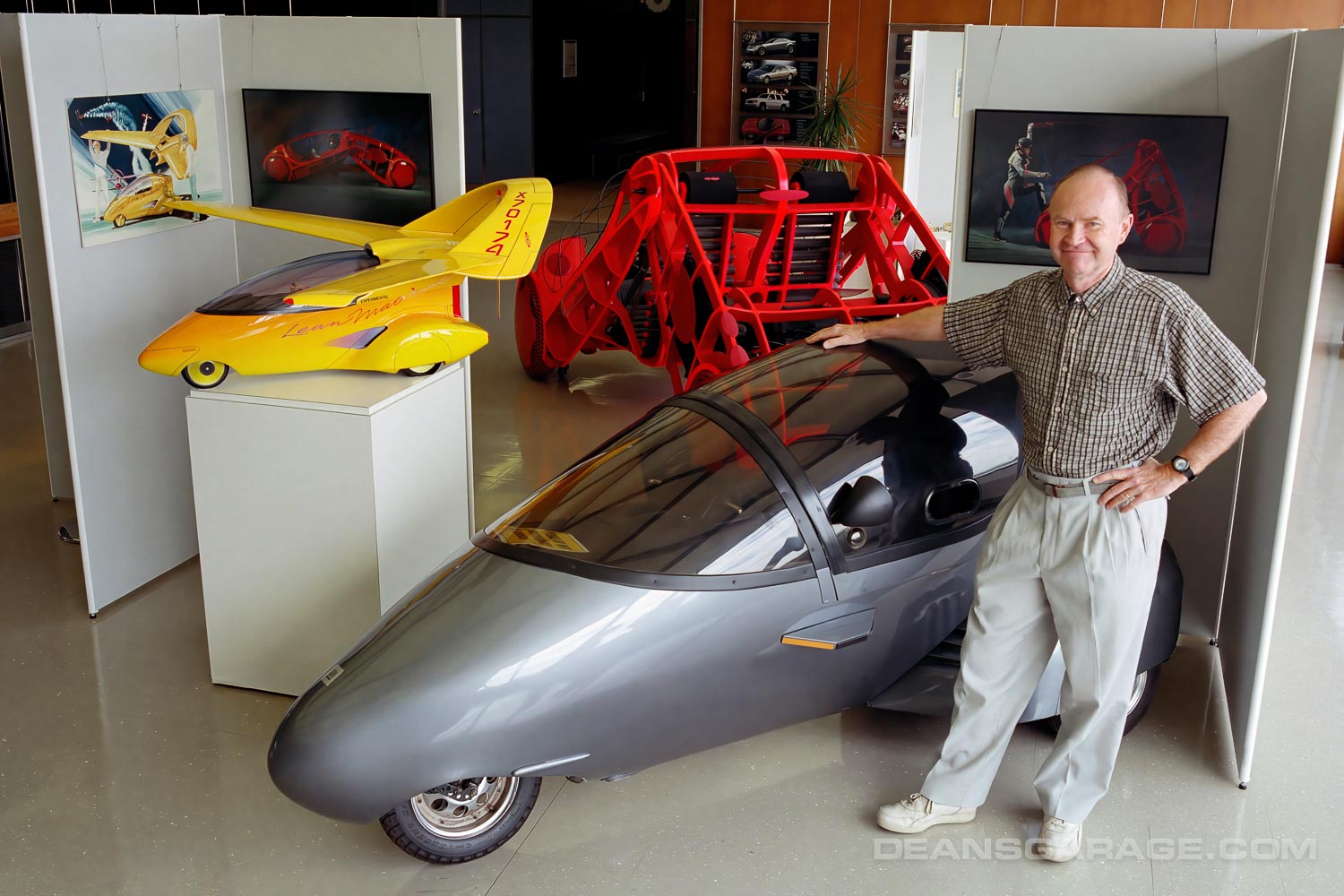
Designer Pres Bruning was one of the many GM designers involved in the EPCOT effort, and his extraordinary creations stand out as the principal imaginer. He’s responsible for the creation of the Chameleon, Asterisk, Hinge-Car, and the GMC Centaur (a pick-up truck that became a full-size concept-car displayed at the Detroit International Auto Show in 1987). He also created the Lean Machine—a cambering vehicle that made a striking appearance in Sylvester Stallone’s 1993 movie “Demolition Man,” driven by Wesley Snipes’ evil character Simon Phoenix.
There were there many other design ideas by Bruning, in scale model and sketch form: freighter aero-trucks with interchangeable containerized cargos; ring-winged and futuristic turbo-prop freighter airplanes (“Containair”); a twin-boom crane and carrier utility zeppelin; high-speed conventional railway train; a maglev (magnetic levitation) ultra-fast “Magliner;” large “Hovair” surface shuttle; multi-wheeled wilderness exploration vehicles; a giant snow caterpillar-powered platform (“Arctic Explorer”) with vertical take-off and landing decks for aircraft; and a mammoth hydroplane luxury liner.
Beyond the concept vehicles themselves, Bruning contributed largely to the general layout of Transcenter with a valuable number of architectural settings and interior decoration designs.
Other featured designers included Bruning’s good friend Elia Russinoff with his “Egg-Car” and “TPC-100 miles per gallon” concepts. Jim Lima’s crazy “Hyper-Ski” was also displayed.
About Pres Bruning
Press was born in 1937 at Providence, Rhode Island. His father was a Navy Lieutenant Commander and doctor, and his mother a house wife. Pres was the oldest of their three sons. He was that kind of kid that spent his free time building model airplanes and submarines, drawing, and learning to play both violin and piano by ear. He grew up in the small town of Millburn, New Jersey.
In his High School years, mechanical drawing and art classes were the ones of his particular predilection. Cars and vehicle “contraptions” began to become his favorite drawing subjects, filling every clean square inch of his school books with doodles. He disdained car racing or other types of sports. Instead, he devoured science fiction, airplane, and hobby magazines.
He liked Sci-Fi milestones like “The Day the Earth Stood Still”, “War of the Worlds“, “The Thing from Another World”, and Flash Gordon/Buck Rogers serials.
“After graduating from Millburn High School in 1955, I went to Franklin and Marshall College in Pennsylvania with the idea of getting an Aeronautical Engineering degree. After two years, I transferred to Pratt Institute in Brooklyn, New York, pursuing instead a degree in Industrial Design. Luckily, I had some scholarships and won some awards that helped me pay partly for my college education, with my parents’ contributing to pay for the rest.
“I will never forget the drawing classes we got there from Rowena Reed Kostellow (See Dean’s Garage post featuring Norm James). In 1960 at Pratt Institute, I became the First Prize Winner by the Sterling Silversmiths Guild of America for my design and fabrication of the “Combination Tea and Coffee Server.“ I got my Bachelors Degree in 1961. I loved rendering techniques the most, but I was well skilled in sketching and modeling too.
“During my four years there I applied for summer employment as a designer of automobiles at General Motors and I stayed with them ever since. In 1963 I was interviewed by Stan Parker and was hired permanently. From 1961 to 1963 I got my Masters Degree in Industrial Design at Syracuse University. There I met my future wife. We were married in June 1963, and moved to Royal Oak, Michigan.
“I started my career at GM as an automotive designer. Not wanting to have anything to do with regular production vehicles from the onset (designing the next model year cars), I worked initially on the Operating Research Vehicle (coded XP-791) and remember building the wood framed mock-up vehicle myself.”
The Operating Research Vehicle was destined to feature at the 1964 New York Worlds’ Fair, but designs from GM’s Advanced Studios were in the end prevented by GM’s board from being shown publicly there.
“I was now able to lead a normal life by joining the Army National Guard for six years (this was during the Vietnam war). During that time we had a baby girl, Erika in 1968. I have enjoyed 38 years of creative and fun designing futuristic transportation projects, like the Lean Machine. I also designed the current thrill ride vehicle at the GM Test Track in the formerly named “World of Motion” GM pavilion at the EPCOT Center, plus a whole lot of other projects that were exhibited there before the conversion from “World of Motion” (closed in 1996) to “GM Test Track” (opened in 1999).
“Besides my regular job at GM, I taught Automotive Design at the College for Creative Studies from 1980 to 1990. From 1990 to my retirement in 2000 I was Chief Designer of Advanced Vehicle Concepts at GM. I have since done some teaching demos for students at the College for Creative Studies in Detroit since my retirement from GM in 2000. I also have some history as a flying model airplane designer, builder and competitor. Many of my model airplane plan drawings were published in magazines like Model Builder. These flying airplane models I made with balsa wood and tissue paper, and were powered by rubber bands. This was a hobby he was always very passionate about.”
A partial resume of the GM projects in which Pres Bruning was involved was recently found by his daughter Erika. Covering only from 1976 to 1980, some other presumably written pages preceding and succeeding this one are lost. Complementing the already mentioned, first person, in the paper written by Pres Bruning years ago that we have transcribed in the previous paragraph, it reads as follows:
1976: Designed and built model of pedestrian shuttle bus for Transportation Systems Division.
1977: Designed vehicle for Transportation Systems Division electric bus program and electric car prototype.
1978: Worked on designs for “Aero” truck program #1, electric bus program for G.M.C., and “Aero” truck program #2. Worked on designs for a lightweight plastic car program for Manufacturing Development Staff.
1979: Worked on design ideas for EPCOT Disney World Project. Designed the running prototype “Aero Astro” tractor trailer truck. Designed the wind tunnel models for the “Aero Astro” program.
1980: Designed full-size, running prototype of Engineering Staff’s one-passenger, high-mileage vehicle. Worked on designs for Design Staff’s high mileage vehicle. Worked on designs for 1986 new truck cab program.
A long-term memory issues does not permit Pres Bruning to further detail these or the many projects that preceded the ones mentioned.
Some words about Pres Bruning from her daughter Erika LeBarre, an accomplished artist and teacher herself, are ideal to close our feature on him.
“Dad’s work was always innovative, creative, and sometimes playful, often reflecting his light hearted nature. He came up with vehicle designs that were “way out there” as people sometimes would say of them. He drew classically with markers, chalk pastels, pens and pencils, but he also did large to full scale tape drawings of specific vehicles when the designs were to go to clay models.
“He also enjoyed creating three-dimensional models using balsa wood and/or foam core (similar to some photos in your articles), usually in skeleton form to show their structure, engineering and function. The models were made with ease by Dad as he was also an avid flying model airplane builder, a hobby he loved very much for most of his life.
“Dad has always been a humble man and never was one to brag about his work or seek out being published, which is why I think he is a designer that has been below the radar.”
To fellow designer William Quan, Pres once declared: “I was always too misunderstood and crazy to be in a Production Studio, so my whole career was spent in the Advanced Studios located in the basement of the GM Design Center.”
Bruning designed Blade-Runner-esque vehicle for the “World of Motion’s” replacement, the “GM Test Track”, a detailed description of which lies beyond the scope of this article. By 1999 “World of Motion” belonged to the past, as well as the “GM Test Track,” which closed in June 2024.
Back in September 2023, Disney announced that “GM Test Track” would be re-imagined again as “Test Track 3.0”, announcing that “imaginers along with teams from Chevrolet are reaching back into history for inspiration—from the original “World of Motion”—and bringing that spirit of optimism to the next iteration of the “Test Track” attraction.” We are sure they have plenty of resources from which to borrow inspiration!
Acknowledgments: Pres Bruning, Erika LeBarre, Christo Datini, Larry Kinsel, William Quan, Clark Lincoln, Dick Ruzzin, George Anderson, Sung Paik, and Dan Sims.
Edited by Gary Smith
Pres Bruning
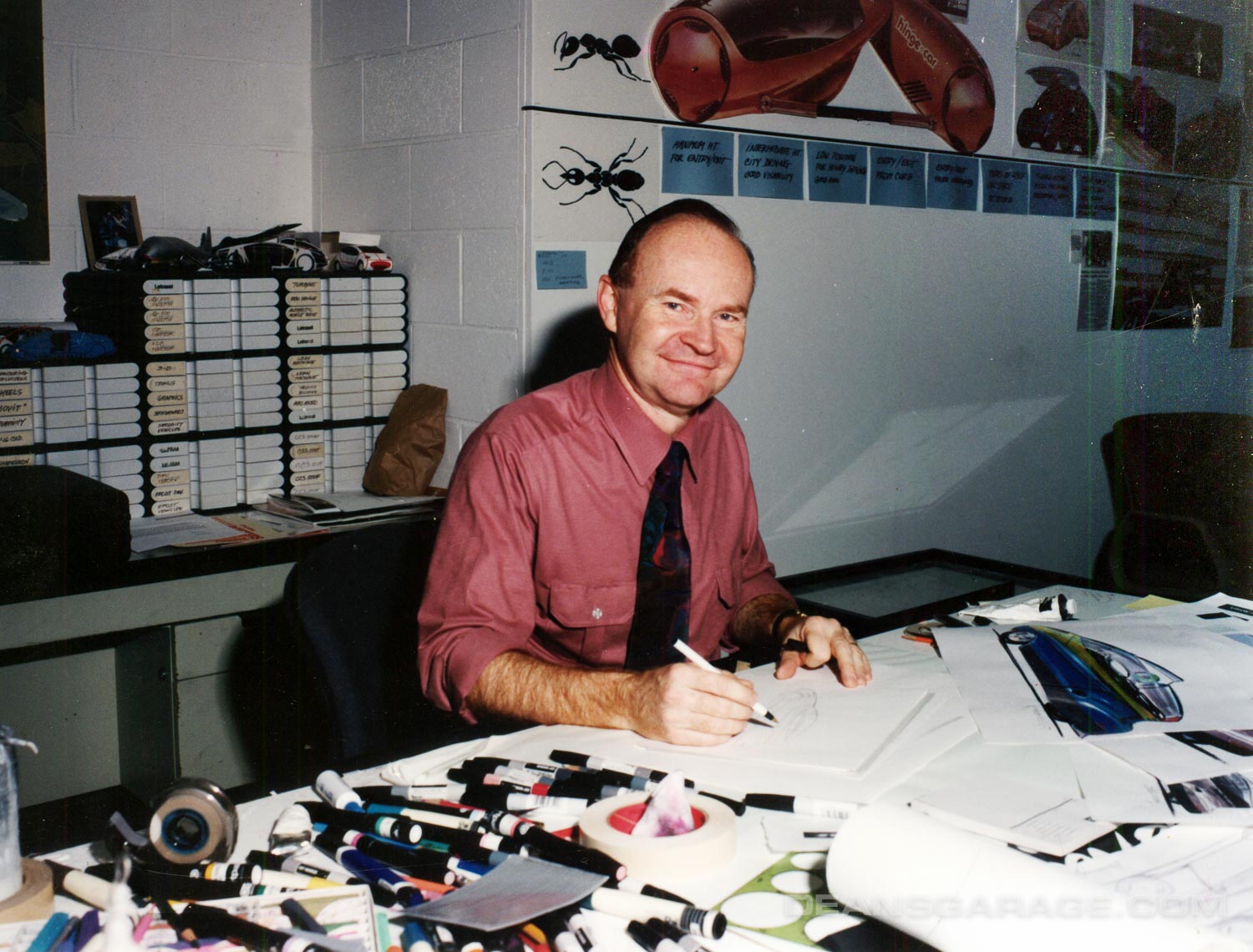
Press Bruning at the office.
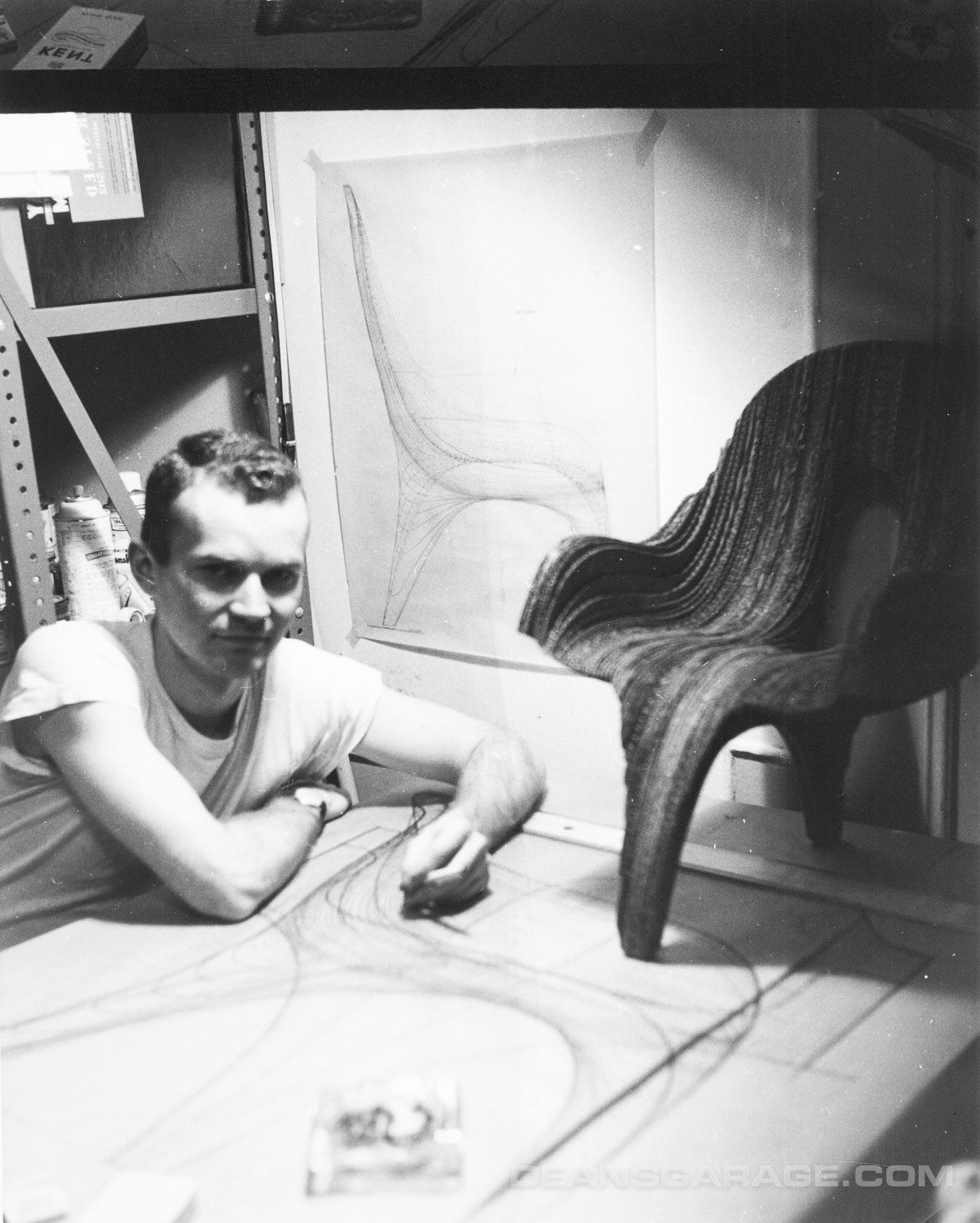
Pres Bruning at Pratt.
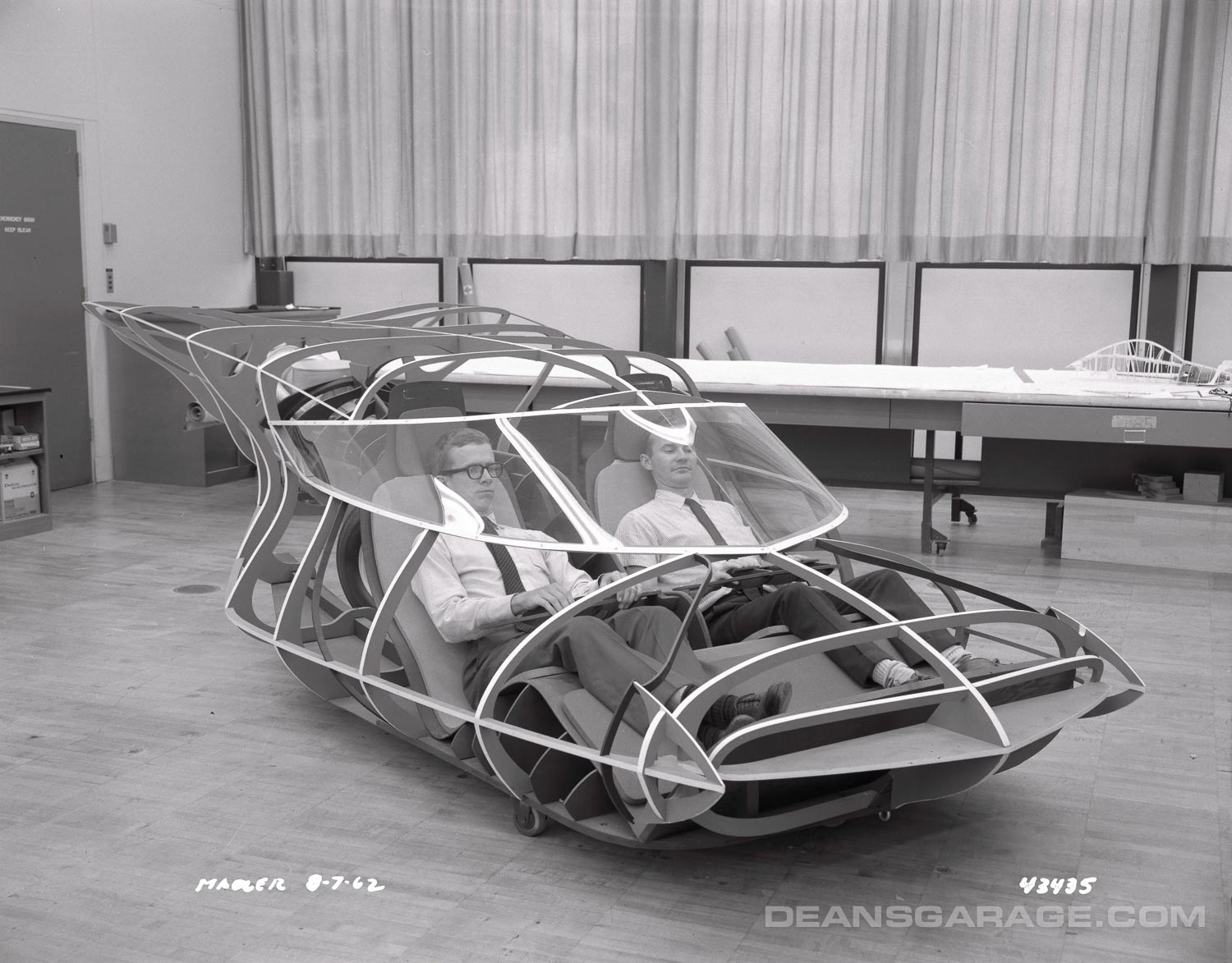
1962. The XP-791 Operational Research Vehicle was Bruning's 1st assignment at GM's Advanced Studio
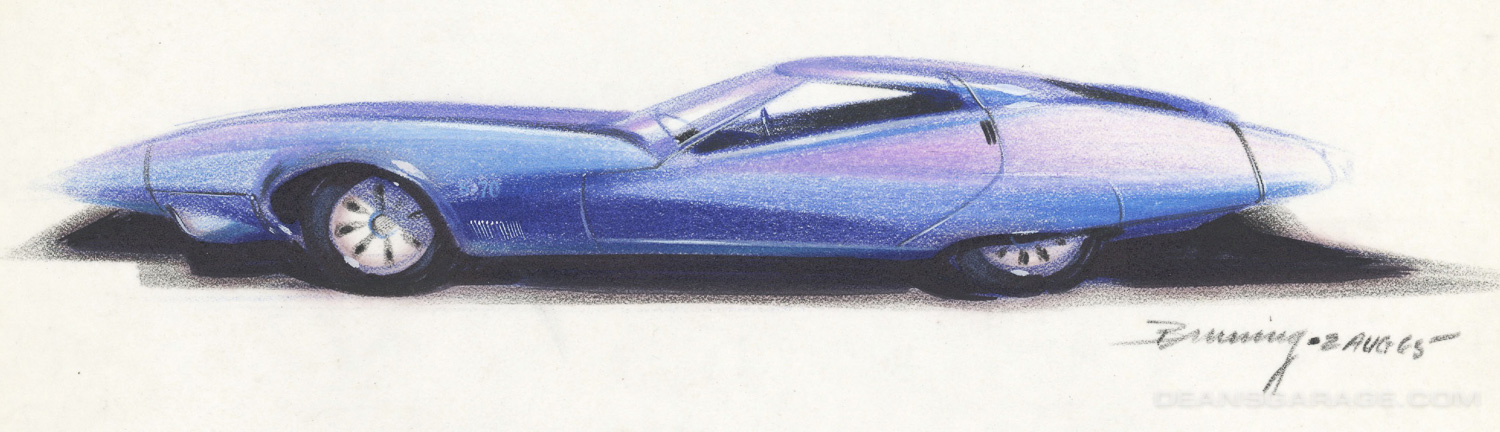
Early sketch from 1965.
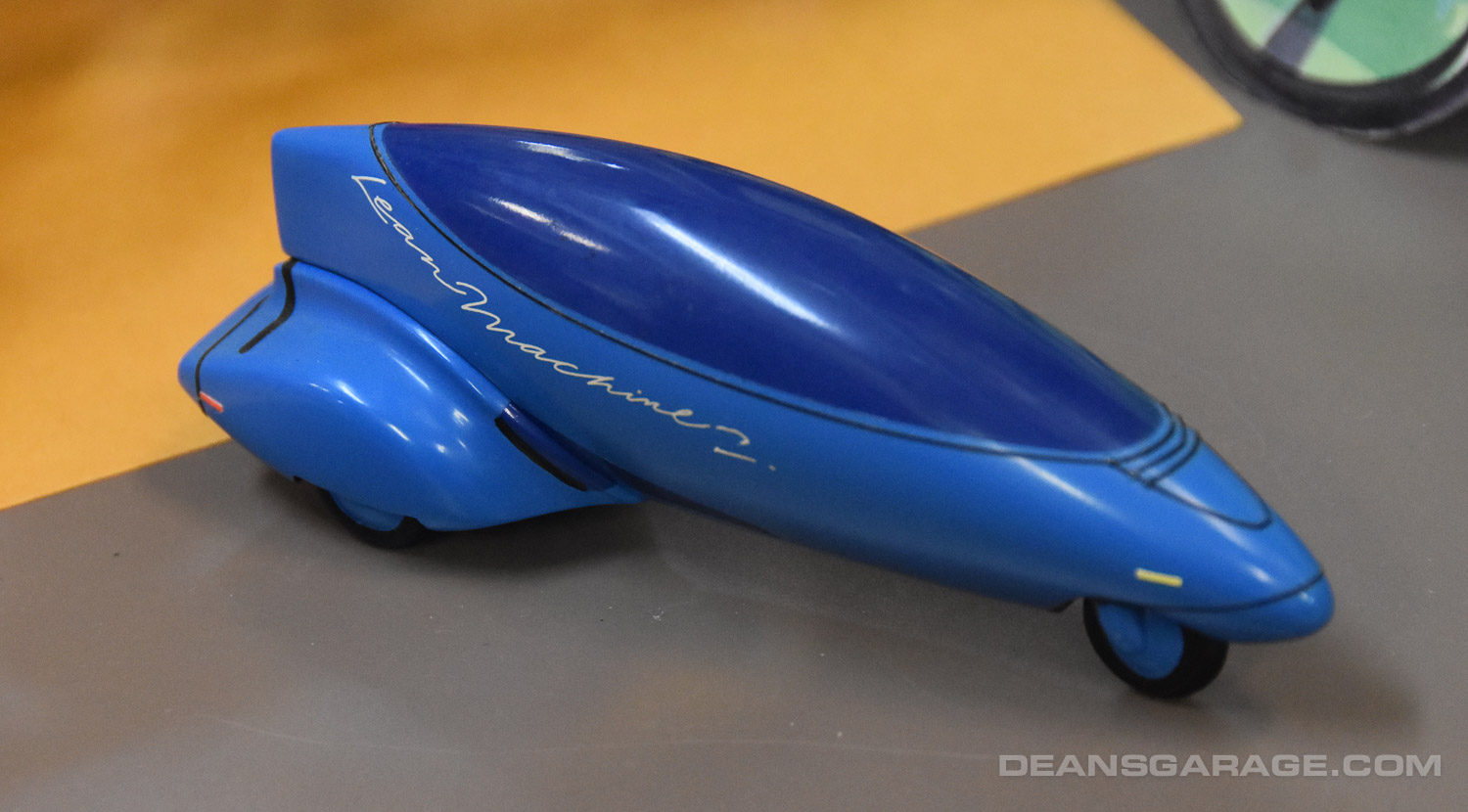
Lean Machine model

Ring wing concept. 1982.
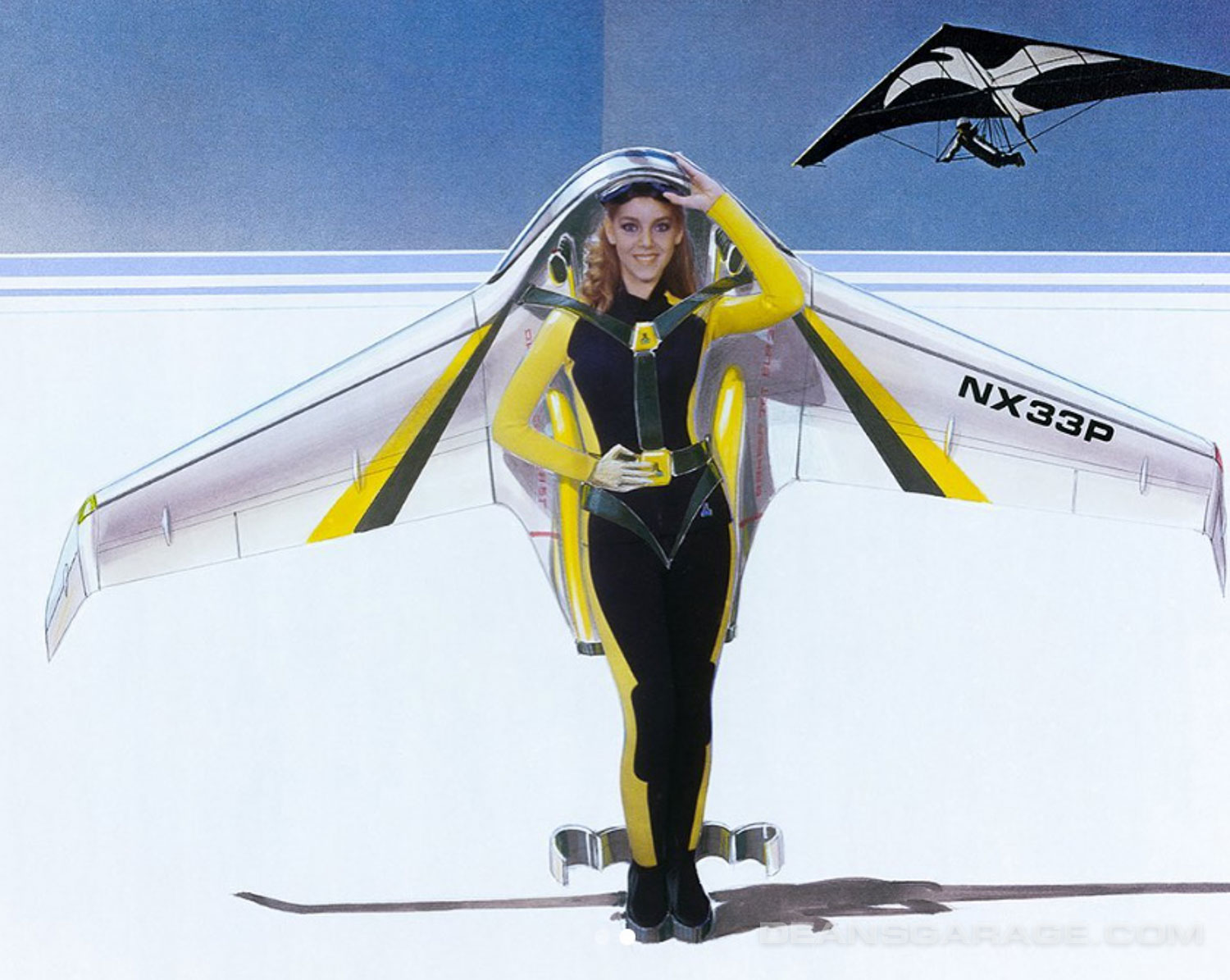
Personal mobility study.

From out of the Forbidden Planet, the Asterisk tandem, two-seater concept.

Hinge Car. 1992.
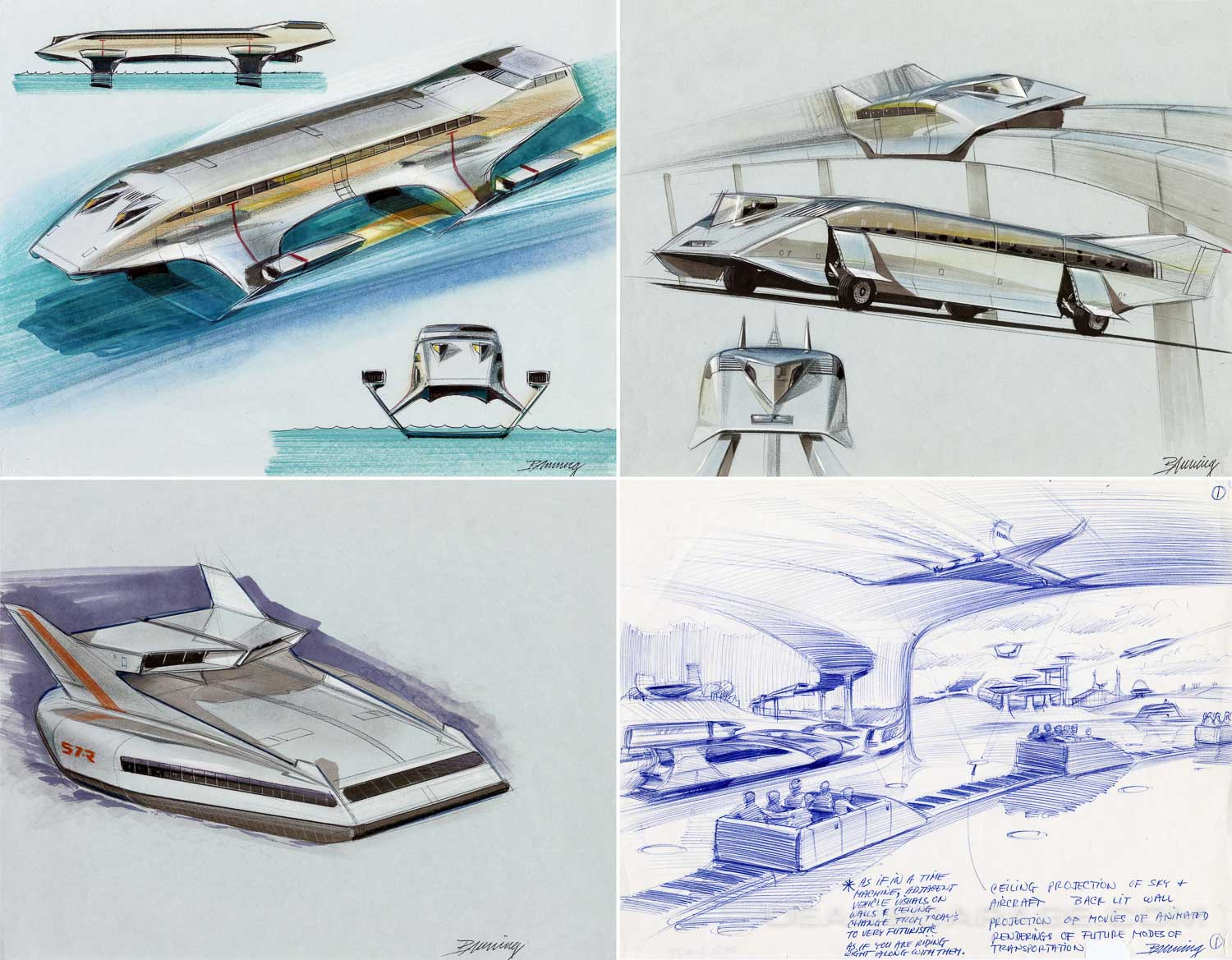
Hydro-foil, Maglev, Hovercraft studies, plus a marvelous initial layout for the Ride.

Turbine-powered Corvette. 1984.
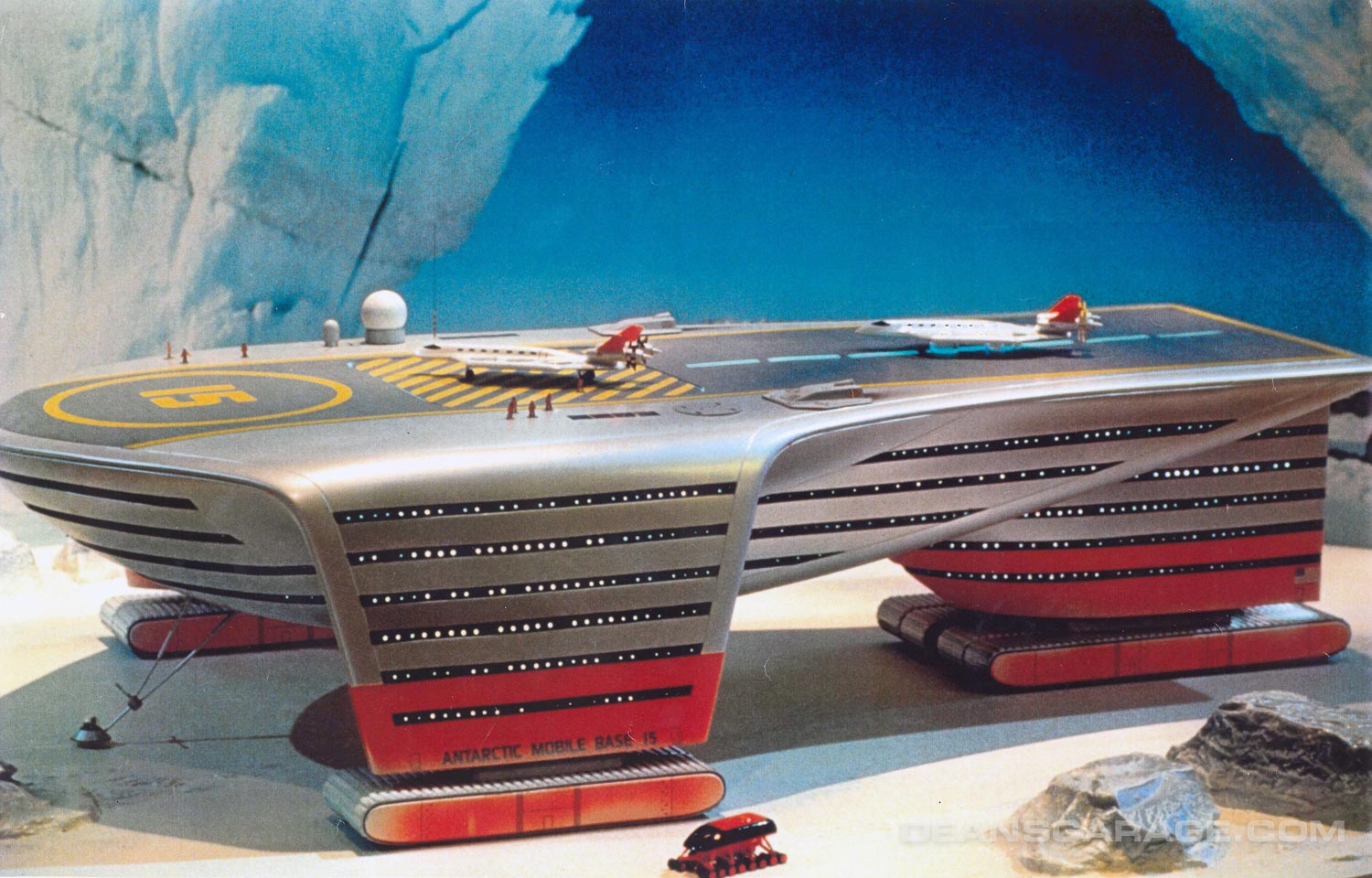
Antarctic Mobile Base 15 looked the work of Star Trek's Enterprise shipyards.

Flying Car concept.
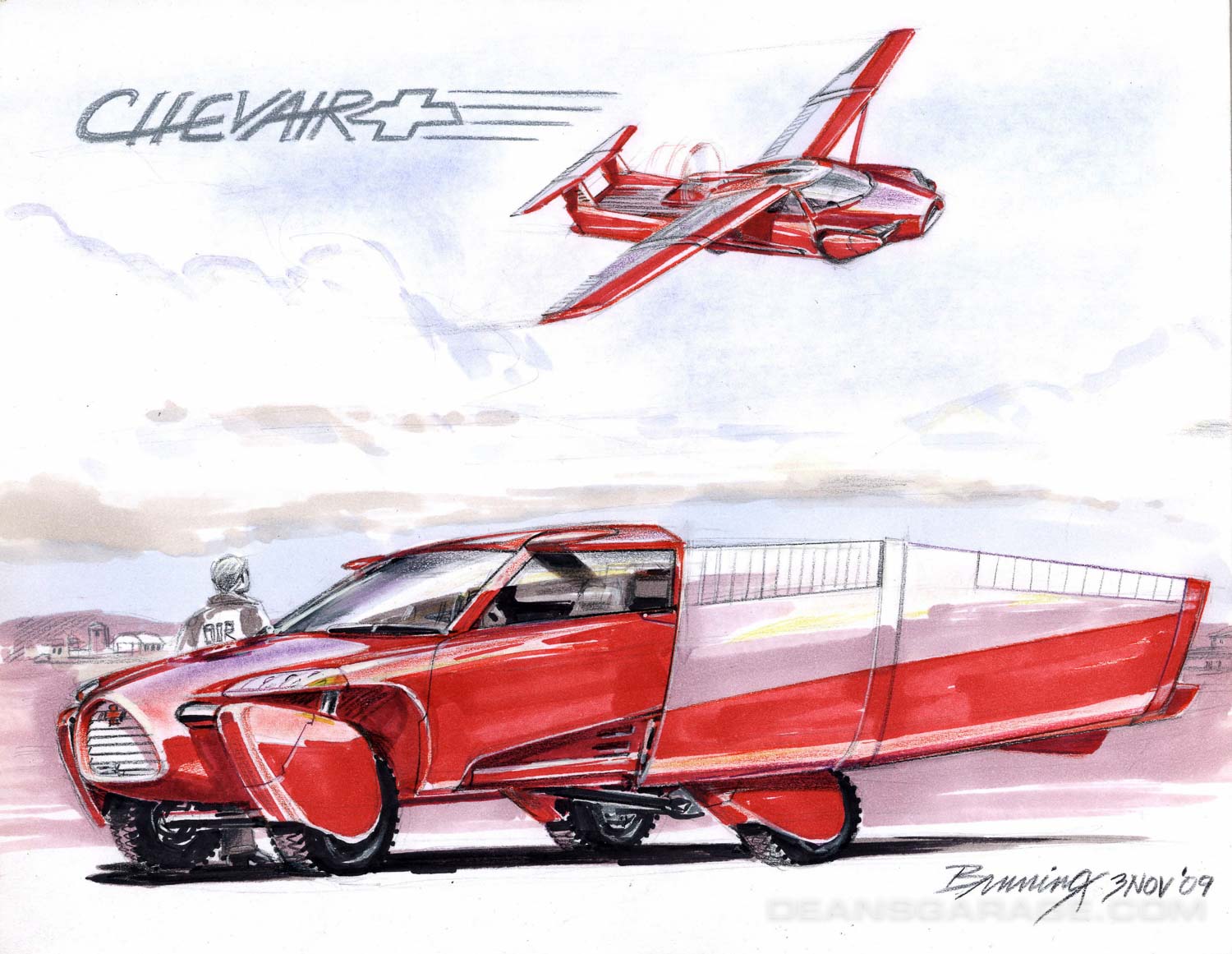
Chevair flying car concept.
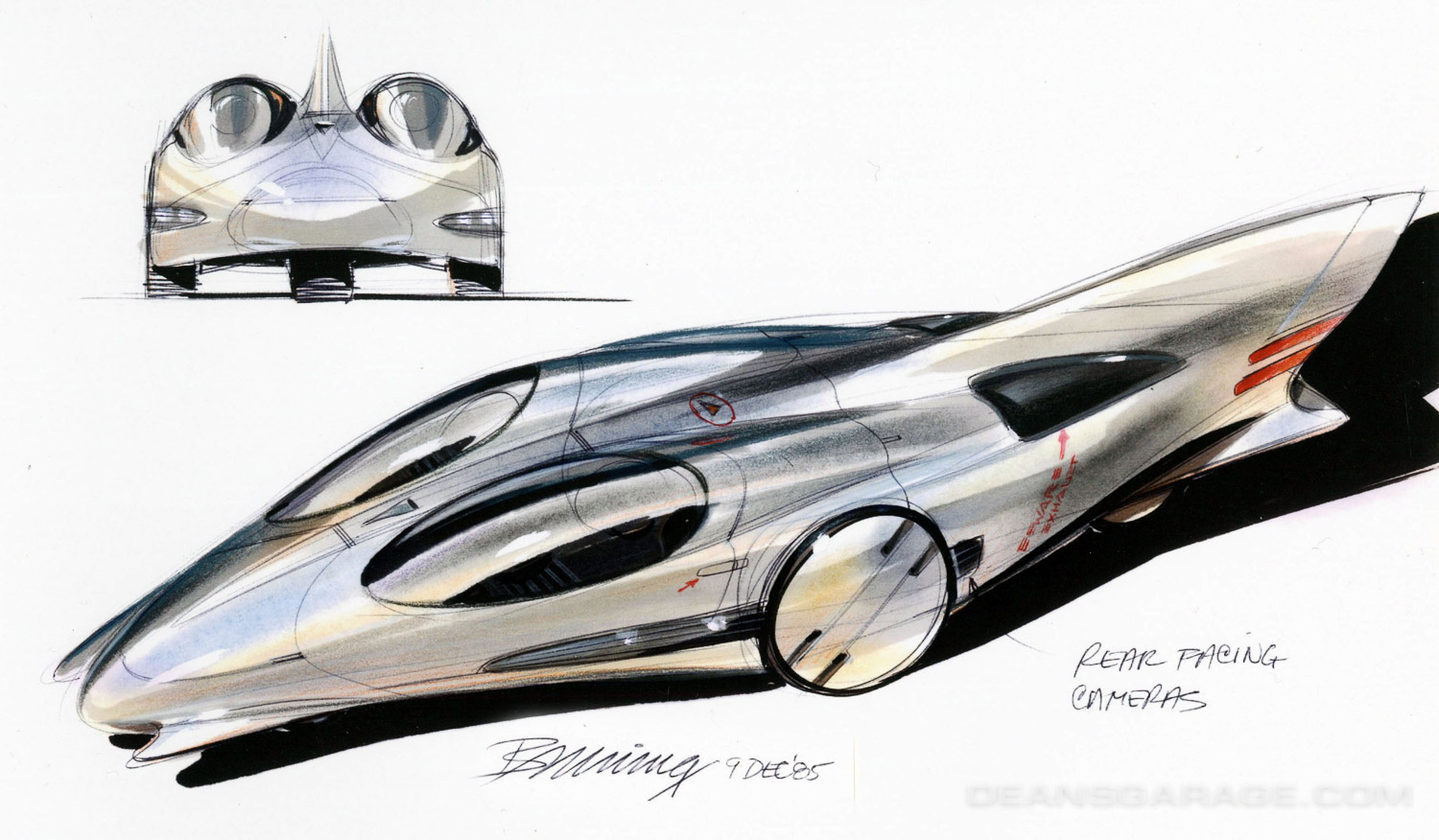
Rhomboid-layout, 1985 exercise to help you forget the cars you saw on the street today.
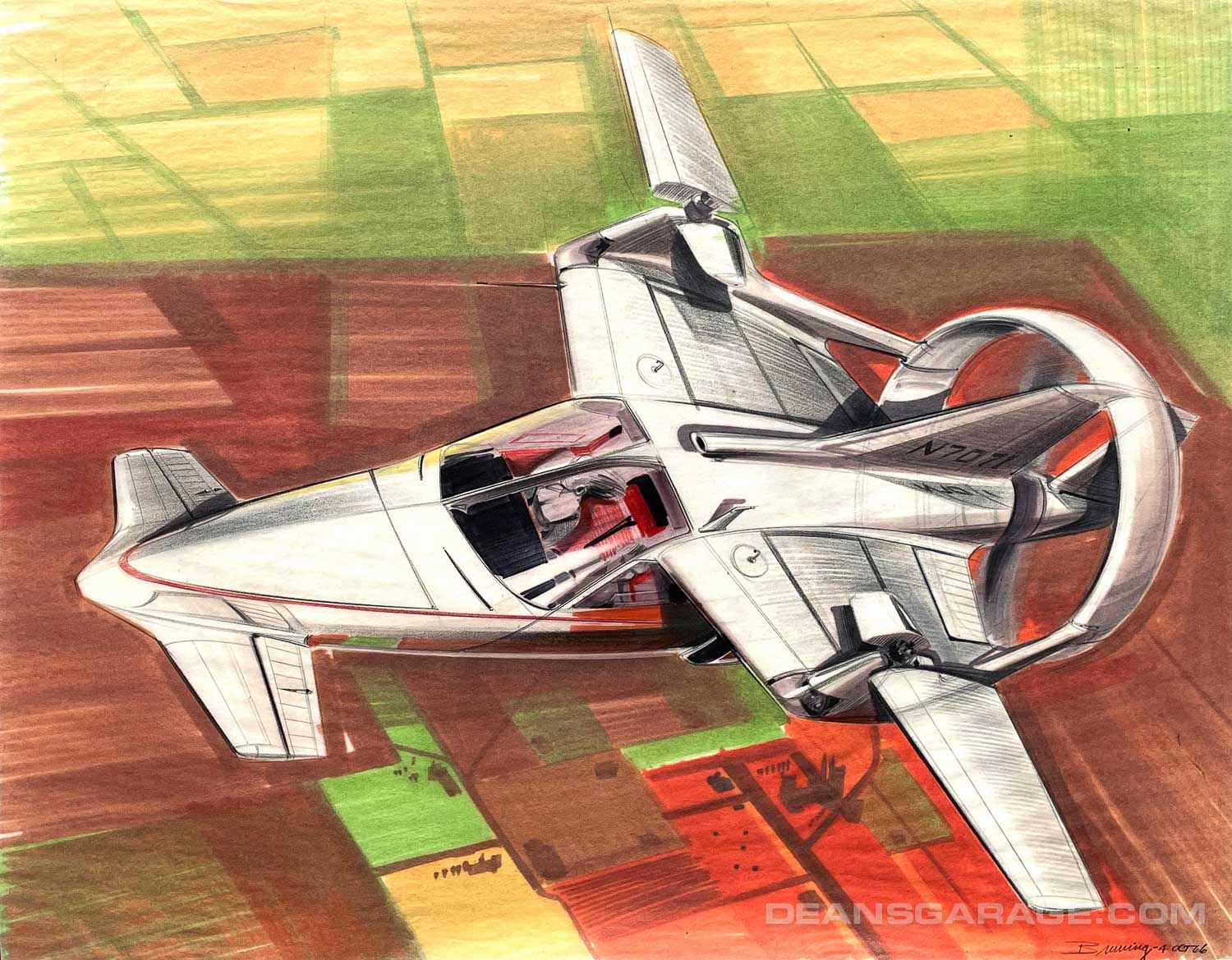
Flying Car Concept. 1966.
Test Track ride vehicle was Bruning's last input into GM's Epcot involvement.
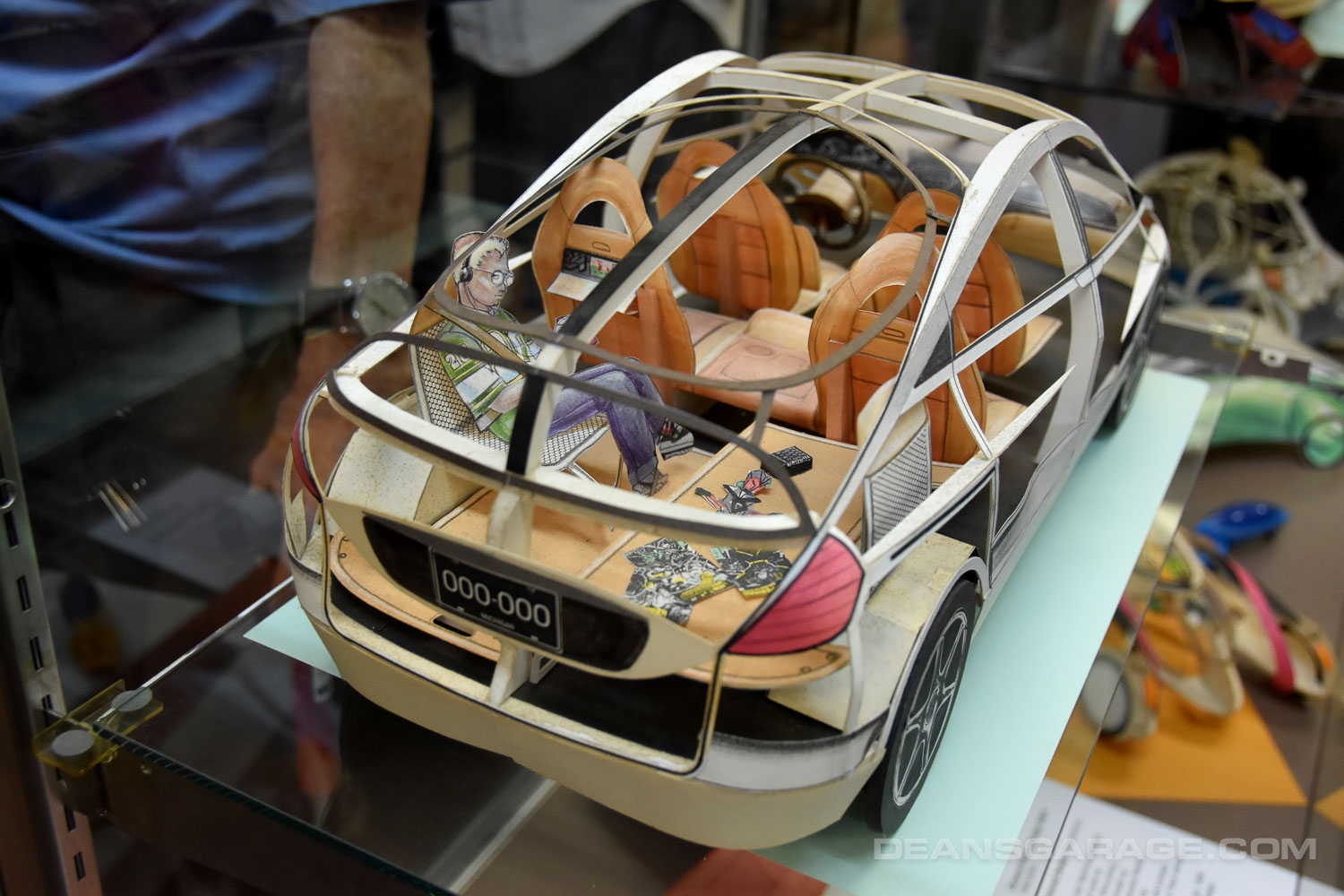
One pf Press Bruning's wireframe models.
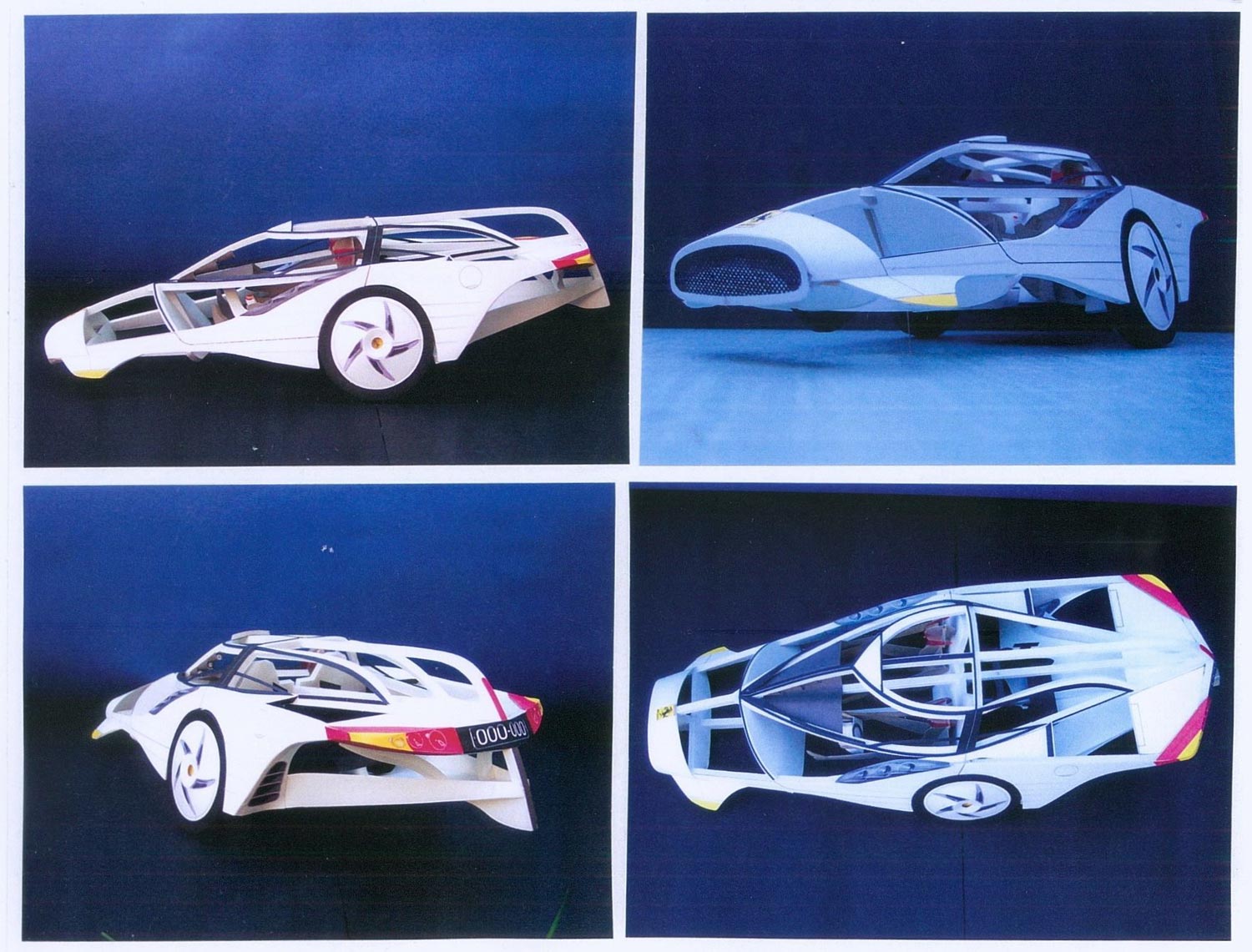
Amazing two-wheeled car concept.
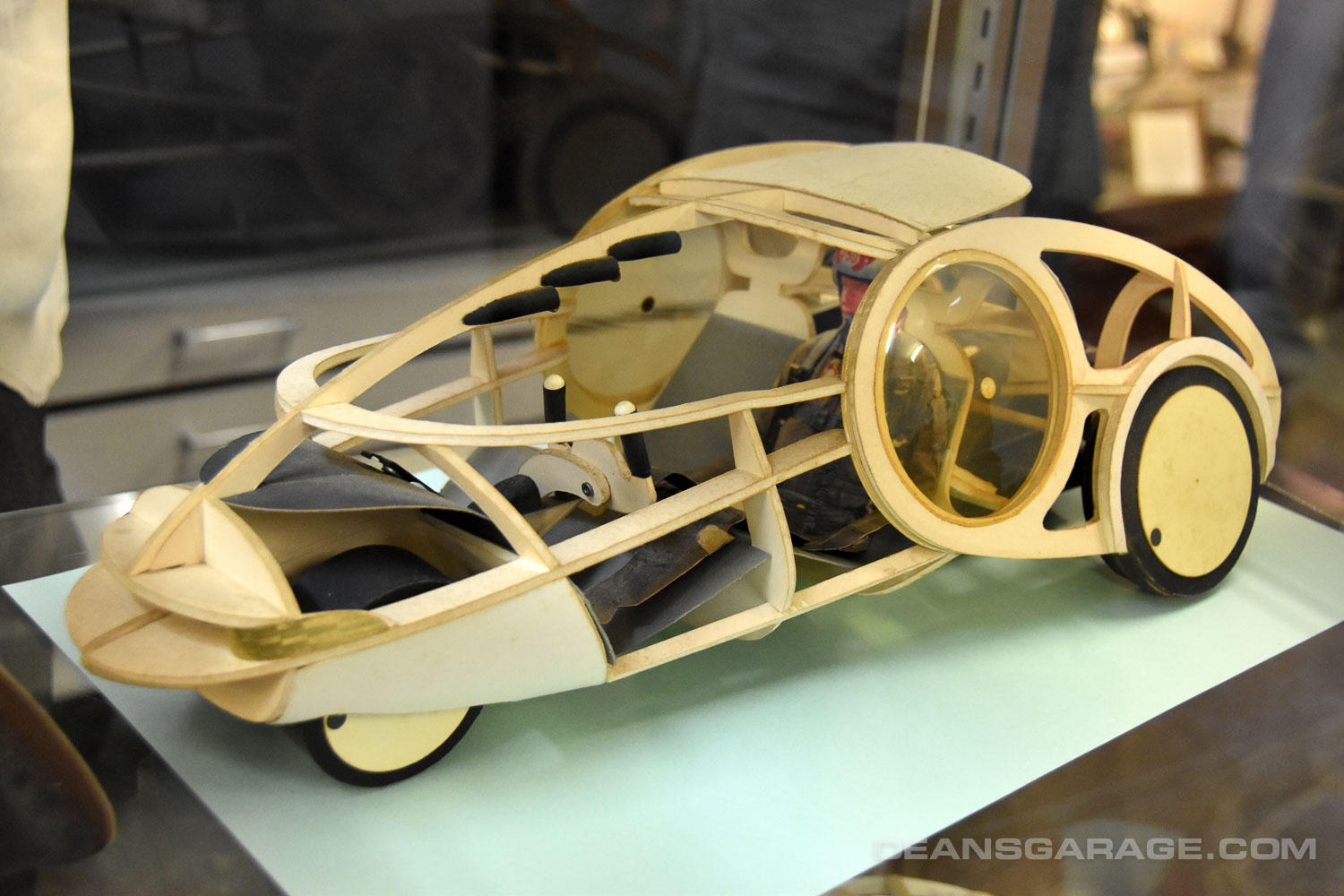
One pf Press Bruning's wireframe models.
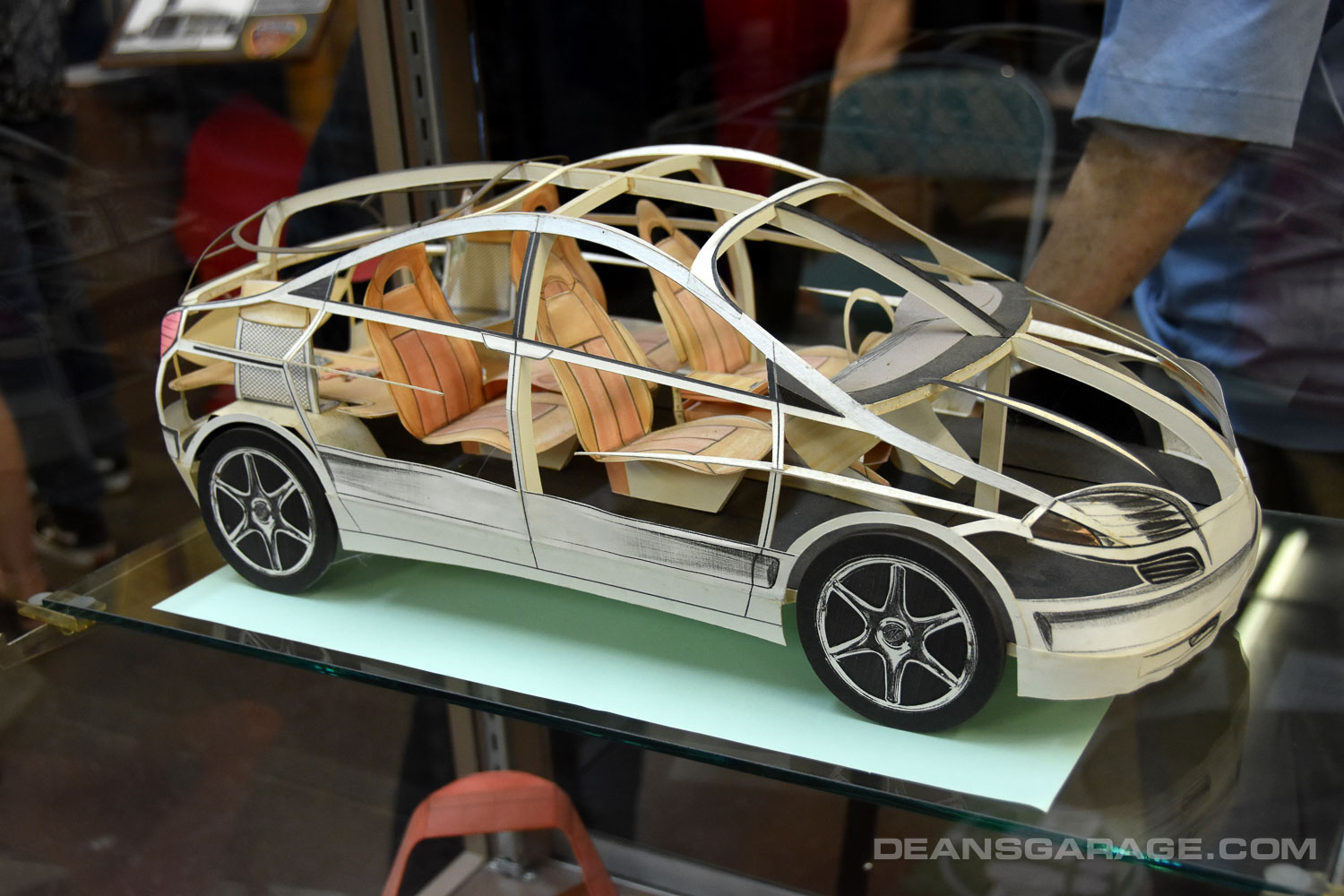
One pf Press Bruning's wireframe models.
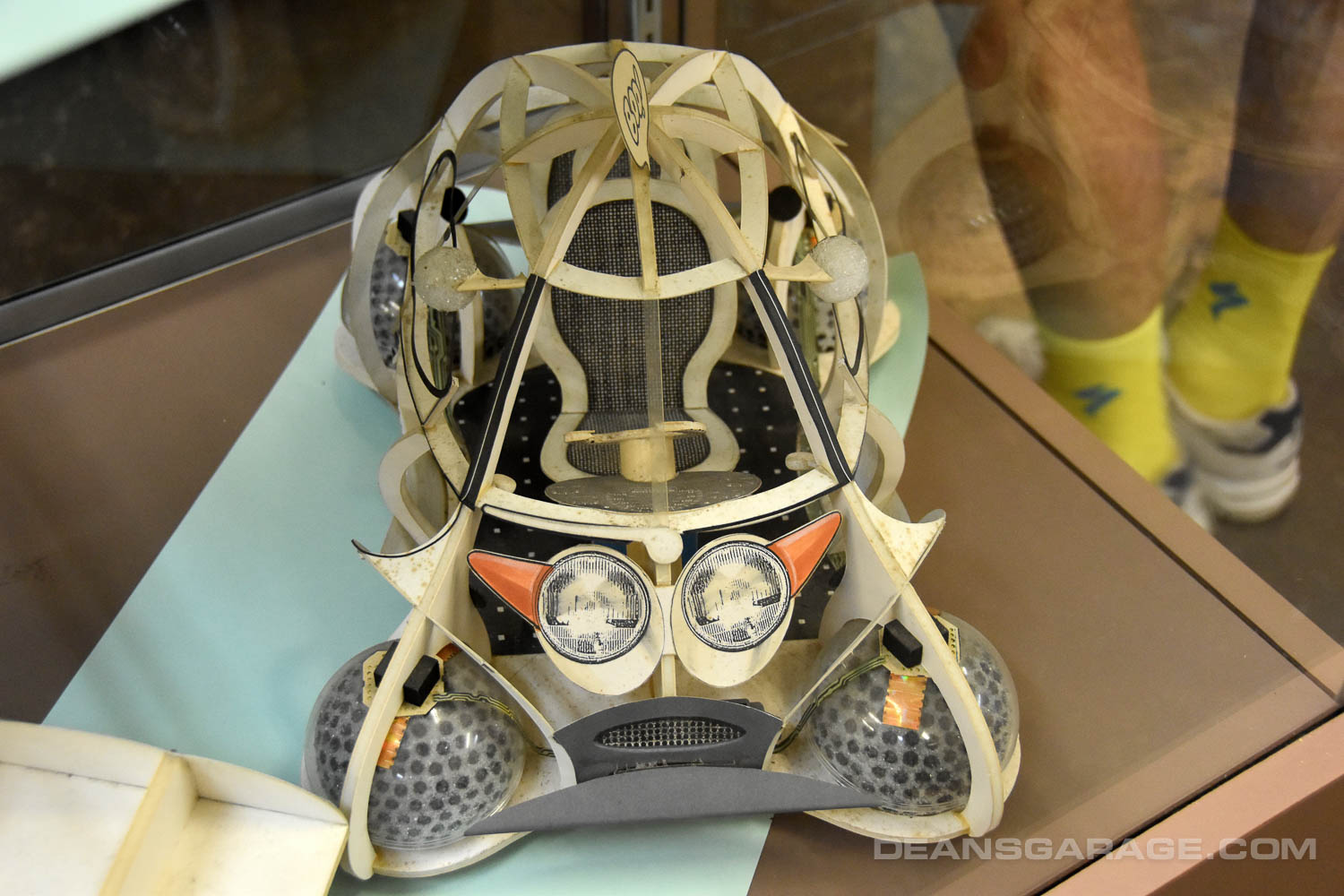
One pf Press Bruning's wireframe models.
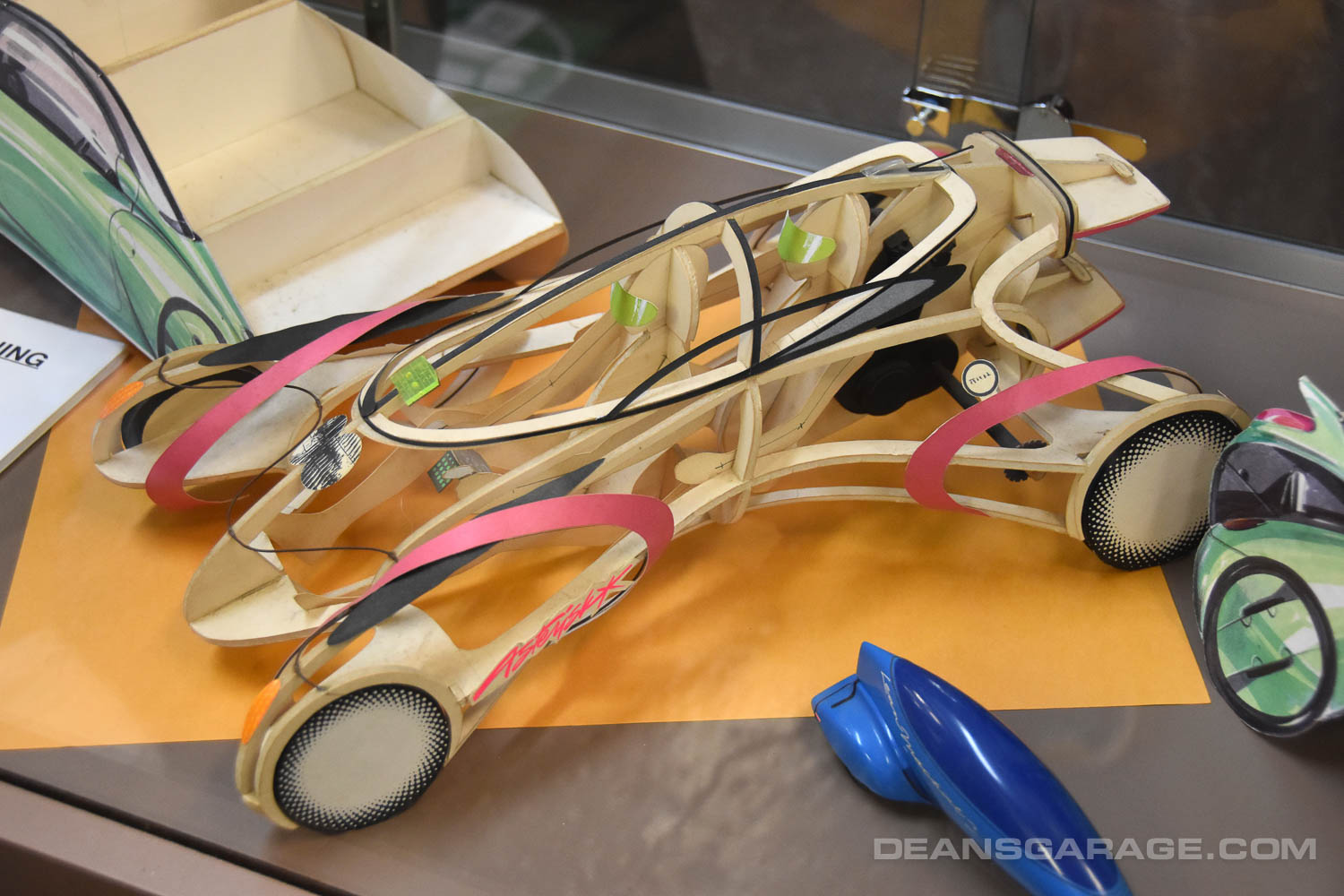
One pf Press Bruning's wireframe models.
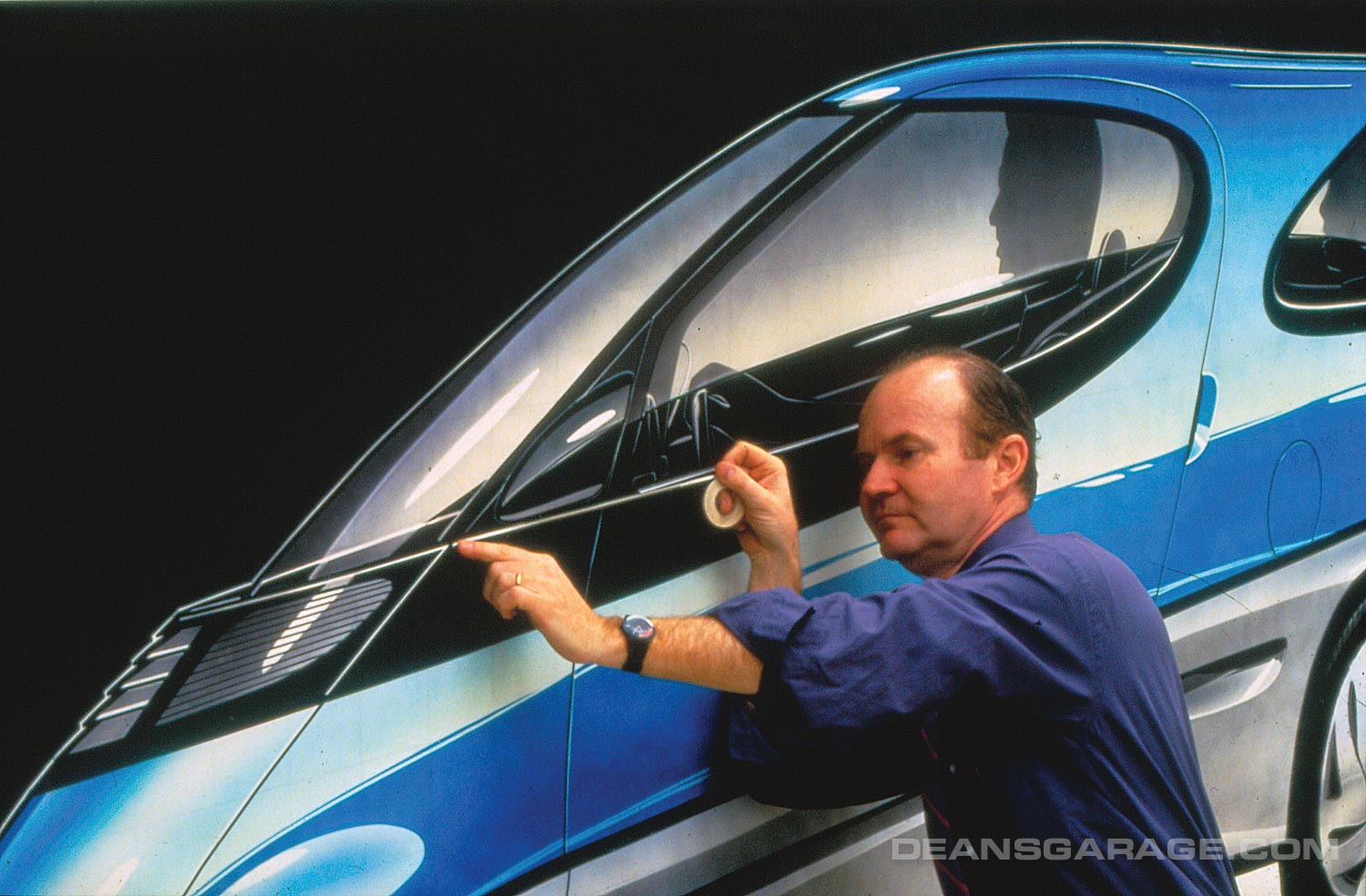
Press tuning up a full-size rendered tape drawing.
Pres is an extraordinary designer and model builder. Grateful to know and have worked with him…. John M. Mellberg
Wow!!! What a great article by friends David Rodriguez Sanchez and Gary Smith about Pres Bruning and Epcot. Terrific concept exploration sketches.
Many thanks.
When I hired in at GM in 1976, Pres was one of the most inspirational designers I had the pleasure to meet and come to know as a great friend over the many years since. His designs for the future were way ahead as well as bring impactful in the entertainment and transportation world. Thank you for all the time I was able to visit your basement studio where you also on occasion hid from Bill Mitchell.
Great article on one of the industry’s more unique designer/creators. Pres was hard core, head down and always pushing the boundaries of conventional transportation design. He had no interest in getting promoted into management- just “give me a studio and support and let me create”! And through the years GM Design management were smart enough to do just that. He was always upbeat and enthusiastic whenever we interacted throughout my 30+ years working with him. Pres!
I was able to show Dad through my iPhone the article you wrote about him. He was happy to see his work and to hear some highlights of the article that I read to him about his accomplishments. He did remember a lot of the photos of his work of which I was glad for. I did not read the entire article yet. I just glossed through it with him, as we did not have a lot of time to visit with he and Mom today. However, I plan to print out the article so that Dad will have a paper copy to look at. Will this article be published in a physical magazine also? If so, is there a way you could send me some magazine copies of that at some point? That would be fantastic, especially for Dad.
At any rate, I wanted take a few minutes to show you a picture of Dad right after I showed him your article and how happy he was to have seen it. I plan to take some uninterrupted time to read your article thoroughly very soon (so much is going on so I just haven’t had the time). Thank you again for all you did to get it out there into the world some of my Dad‘s fantastic accomplishments in the automobile design world, particularly with Epcot’s World of Motion.
Sincerely, Erika LeBarre
Great story about Press, I knew of some of the concepts that he created and admired his creativity and glad that his story is told, often the quiet ones never get the recognition they deserve. Thank you Gary for putting it out there .
I come from Pres’ rubber band powered scale flying model airplane slice of the creative and community pie that we know as Pres.
This Black kid from Philly making a living as a musician was I, becoming a modeler in a pastime that I didn’t think I deserved, to a designer in my own right, better musician and writer, and even better escape artist from the vagaries of my abusive inner city upbringing. Pres was on of the men who took me under their wing, revered my model building and flying, and told me I could do things I only dreamed of when I first saw his wares.
Life changing stuff. Mine, anyway. Forever grateful.
Pres was one of the most creative designers I’ve ever known. His ability to design and make a model of his creations were legendary. I’m so glad Gary, someone finally gives Pres the exposure he earned. What a great guy!
I just read that again and it brings back memories, of course. I remember being Assistant Chief Designer to Ned Nichols in the Overseas Studio and we designed the car that went through the Disney ride. We only spent a couple weeks on it. It was a simple project and we made a scale model that was then sent out to be built somewhere. Can’t remember the details.
But I do remember I was sent on a trip to Disney and had a chance to take the ride and go through many of the Disney features. I think the most startling thing was that later in the afternoon of that first day we were asked if we’d like to have an ice cream conel. The ice cream store was across the Disney lot, a long ways away. No problem, our escort said come with me. We went behind one of the buildings got in a car and drove around to the ice cream store, temporary around all of those rides and all of those presentations was a street that would take you anywhere at Disney. What an incredible place.
Press Bruning was so much fun to work with. I had a chance to do that a couple of different times the one sensational thing I remember, regarding his model airplanes was a model of he made of the World War I Red Baron airplane. A stick model covered with red paper, the pilot was Snoopy. And he had a white silk scarf that waved when the plane circled the studio. Press kept practicing trying to get it to take off, over and over, he could not get it right and finally one day just as it took off BILL Mitchell walked in.
He stood there and looked at it, never said a word and left. Pres thought that he was in trouble but Ned Nichols, our chief designer said don’t worry, Mitchell has a great sense of humor. About three weeks later, the door opened and in came Bill Mitchell, with some friends.
“Can you fly the plane again”? he said… Pres wound it up with his little hand drill and let it go. Not knowing what would happen. Every one of us was scared stiff that something was going to go wrong, that it would be a be a disaster of some kind. Instead, it made a perfect flight, three laps around the studio and then it landed right in the middle the room between the Clay model platforms. Mitchell and his friends all clapped their hands, laughed and turned around and left the studio. I can only think that of all the things they saw that day, many of which they would never remember, that flight of Presses Red Baron would never be forgotten.
I didn’t work with them enough.
I’ve always admired Pres’ work from afar, especially after seeing his signature affixed to some of the conceptual drawings that led to the 1968 Rapid Transit Experimental concept bus (unsure if that’s what the aforementioned ‘electric bus’ was referring to). I was unaware, however, of his involvement with the Aero Astro program. I’d be curious to know if he helped shape the even more radical prototype that birthed the still-radical production model – alas…
*ignore my speculation on the “electric bus;” RTX dates from ’67-68, well in advance of the dates provided here…